The oldest Pokemon are the ones whose Pokedex text, the in-game encyclopedia, gives an age or a span of time. These 15 qualify, and one of those ages is borrowed from a magazine story.
Each entry lists its base stat total, the sum of a Pokemon's core stats, and you can check any of them against the full Pokemon index.
The 15 Oldest Pokemon
#15
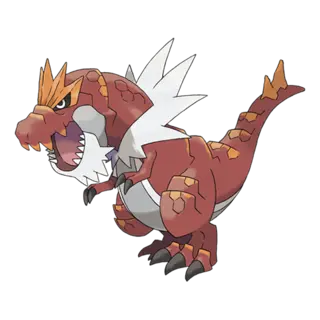
Tyrantrum
#697
Type
RockDragon
Category
Despot Pokémon
National Dex
#0697
Debut
Gen VI
Base stat total
521
Tyrantrum makes the cut because nothing could stop it 100 million years ago, and it behaved like a king. Its jaws could shred thick metal plates as if they were paper, which made it invincible in the ancient world it once inhabited. Complete restoration is impossible, and its entire body was once covered in a feather-like coat. We'd pay to see a despot in feathers. Its Attack stat, the number behind its physical hits, sits at 121.
The Despot Pokemon stands 2.5 m tall and weighs 270 kg.
#14
Tyrunt
#696
Type
RockDragon
Category
Royal Heir Pokémon
National Dex
#0696
Debut
Gen VI
Base stat total
362
Tyrunt comes from the same age, since it lived 100 million years ago and was restored from a fossil, but the manners didn't survive. It's spoiled and selfish, and when something happens that it does not like, it throws a tantrum and runs wild. That would be easier to live with if it weren't strong enough to chew up an automobile. It can also inflict grievous wounds on its Trainer, the person raising it, just by playing around.
Filed as the Royal Heir Pokemon, it stands 0.8 m and weighs 26 kg.
#13
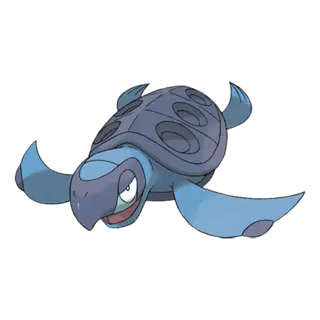
Tirtouga
#564
Type
WaterRock
Category
Prototurtle Pokémon
National Dex
#0564
Debut
Gen V
Base stat total
355
Tirtouga starts in the water, because about 100 million years ago these Pokemon swam in oceans. It lived in warm seas, and it can apparently dive to ocean depths of over half a mile, although it also came up onto the land to search for prey. It's reputed to be the ancestor of most turtle Pokemon, which we suspect makes every family reunion a long one.
The Prototurtle Pokemon weighs 16.5 kg and stands 0.7 m.
#12
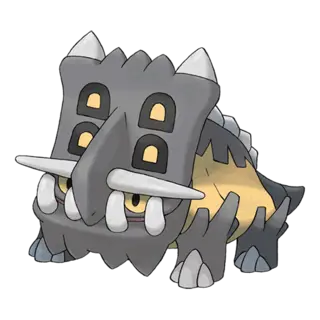
Bastiodon
#411
Type
RockSteel
Category
Shield Pokémon
National Dex
#0411
Debut
Gen IV
Base stat total
495
Bastiodon is from roughly 100 million years ago, and everything about it starts with the face. Its terrifyingly tough face is harder than steel, and the bones were so huge and hard that they were mistaken for its spine. The numbers agree, because its Defense stat, which cuts the damage from physical hits, is 168. It lived in the same environments as Rampardos, and their fossils have been found together.
It's a Shield Pokemon and stands 1.3 m tall.
#11
Shieldon
#410
Type
RockSteel
Category
Shield Pokémon
National Dex
#0410
Debut
Gen IV
Base stat total
350
Shieldon lived in jungles around 100 million years ago, and its face is also all that survives. Nothing but its face has ever been discovered, and almost none of the fossils show signs of damage to it, thanks to that extremely hard facial hide. It was calm and disliked conflict and spent its days polishing its face against trees and rocks. (Worse hobbies exist, though none of ours left fossils.) Its Defense stat is 118.
Like Bastiodon it's a Shield Pokemon, though it weighs only 57 kg.
#10
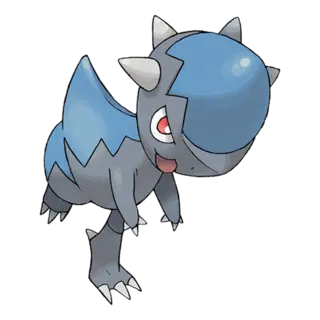
Cranidos
#408
Type
Rock
Category
Head Butt Pokémon
National Dex
#0408
Debut
Gen IV
Base stat total
350
Cranidos lived in jungles around a hundred million years ago too, and where Shieldon polished its face, this one swung it. Its skull is as hard as iron, and it downs prey with its head butts. An Attack stat of 125 backs that up. The Pokedex adds that it has a hard and sturdy skull, lacking any intelligence within, which is a low blow we'd hesitate to deliver to a skull that hard. It snapped trees by headbutting them, then fed on their ripe berries, and fossilized tree trunks snapped in two turn up with its fossils.
The Head Butt Pokemon stands 0.9 m tall.
#9
Relicanth
#369
Type
WaterRock
Category
Longevity Pokémon
National Dex
#0369
Debut
Gen III
Base stat total
485
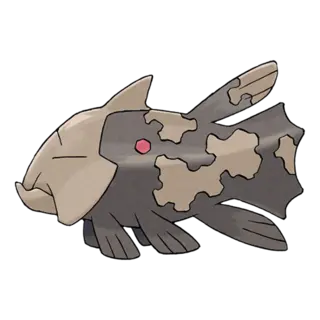
Relicanth goes the other way, because the species has not changed its form for 100 million years. It was once believed to have been extinct until it was discovered during a deep-sea exploration. Because its form has not changed, it's called a living fossil. The reason for all that stillness is that it's apparently already a perfect life-form. So it walks on the seafloor using its pectoral fins and feeds on microscopic organisms with its toothless mouth.
The Longevity Pokemon weighs 23.4 kg and measures 1 m.
#8
Anorith
#347
Type
RockBug
Category
Old Shrimp Pokémon
National Dex
#0347
Debut
Gen III
Base stat total
355
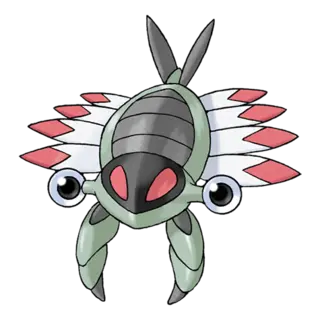
Anorith lived in the ocean about 100,000,000 years ago, hunting with its pair of claws, and unlike Relicanth it had to be regenerated from a prehistoric fossil. The limbs it swims with were feet that adapted to life in the sea, and it's an ancestor of modern bug Pokemon. Even so, restored ones do not thrive, because the water composition has changed since their era. (After that long a wait, we would complain about the water too.)
It's the Old Shrimp Pokemon and stands 0.7 m tall.
#7
Lileep
#345
Type
RockGrass
Category
Sea Lily Pokémon
National Dex
#0345
Debut
Gen III
Base stat total
355
Lileep became extinct approximately a hundred million years ago, and it was regenerated from a fossil as well, but it doesn't chase anything. It remains permanently anchored to a rock and disguises itself as seaweed by making its tentacles sway. Those tentacles are shaped like flower petals, and prey that drifts into reach gets swallowed whole. Its grip will hold on no matter how rough the surf gets, so it can afford to wait.
Filed as the Sea Lily Pokemon, it weighs 23.8 kg and stands 1 m.
#6
Amaura
#698
Type
RockIce
Category
Tundra Pokémon
National Dex
#0698
Debut
Gen VI
Base stat total
362
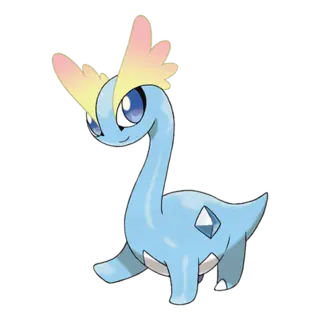
Amaura was restored from part of its body that had been frozen in ice for over 100 million years. It lived in a cold land where there were no violent predators like Tyrantrum. It is not expected to live long because of the heat of the current environment. When it whinnies, auroras appear in the night sky, which we'd call a generous way to complain about the weather.
At 25.2 kg and 1.3 m, it's the Tundra Pokemon.
#5
Carbink
#703
Type
RockFairy
Category
Jewel Pokémon
National Dex
#0703
Debut
Gen VI
Base stat total
500
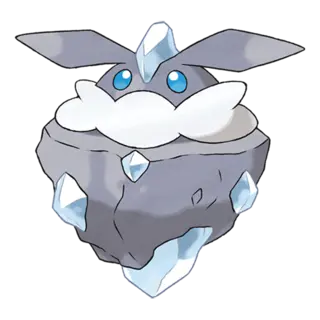
Carbink is where the figures jump, because it has slept underground for hundreds of millions of years since its birth. It was born from the temperatures and pressures deep underground, and it's occasionally found during the excavation of caves. Somewhere in the world there is a mineral vein housing a large pack of slumbering Carbink, and the pack has a queen. We've had long naps, but nobody crowned a queen during one. It's not especially rare, and its glittering, jewel-draped body draws attention from people.
This Jewel Pokemon stands 0.3 m tall and weighs 5.7 kg.
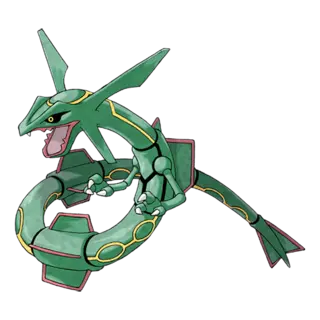
#4
Rayquaza
#384
Type
DragonFlying
Category
Sky High Pokémon
National Dex
#0384
Debut
Gen III
Base stat total
680
Rayquaza is said to have lived for hundreds of millions of years as well, but Carbink went down and this one went up. Its home is the earth’s ozone layer, above the clouds, which helps explain why its existence had been completely unknown. It flies forever through the ozone layer, consuming meteoroids for sustenance, and legends remain of how it put to rest the clash between Kyogre and Groudon. Its base stat total of 680 is the highest among the Pokemon with a date attached.
Its category is Sky High Pokemon, and it stands 7 m tall.
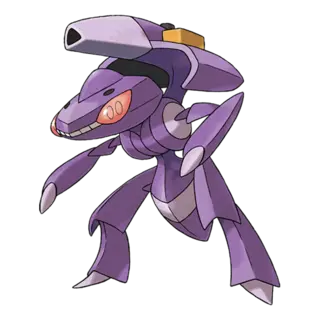
#3
Genesect
#649
Type
BugSteel
Category
Paleozoic Pokémon
National Dex
#0649
Debut
Gen V
Base stat total
600
Genesect comes with a firm date, since it existed 300 million years ago, and back then it was feared as the strongest of hunters. That apparently wasn't enough for Team Plasma, which altered it and attached a cannon to its back, then upgraded the cannon as well. On paper it still hits hard, with Attack and Special Attack, the stat behind energy-based moves, both at 120. Its base stat total of 600 trails only Rayquaza among these ancient Pokemon.
The Paleozoic Pokemon weighs 82.5 kg.
#2
Kabuto
#140
Type
RockWater
Category
Shellfish Pokémon
National Dex
#0140
Debut
Gen I
Base stat total
355
Kabuto shares that date, but where Genesect got rebuilt, this one has not changed at all for 300 million years. Most are seen as fossils found on what was once the ocean floor, though in extremely rare cases living examples have been discovered. Kabuto molt every three days, making their shells harder and harder. It uses the eyes on its back while hiding on the sea floor and protects itself with its hard shell.
It's filed as the Shellfish Pokemon and measures 0.5 m.
#1
Scream Tail
#985
Type
FairyPsychic
Category
Paradox Pokémon
National Dex
#0985
Debut
Gen IX
Base stat total
570
Scream Tail holds the biggest number of all, and the number belongs to something else. It resembles a mysterious Pokemon described in a paranormal magazine as a Jigglypuff from one billion years ago, which makes the age secondhand. Iron Thorns gets the same treatment, since it has similarities to a Pokemon the magazine called a Tyranitar from one billion years into the future. Our trust in that magazine goes about as far as a Jigglypuff can throw a Tyranitar. Scream Tail's other lead is vaguer, a mysterious creature depicted in an old expedition journal, and there has been only one reported sighting.
It's the Paradox Pokemon, 1.2 m tall and 8 kg.
One Age Is Borrowed
Most of the ages given for these Pokemon come down to one round figure, 100 million years. The one billion at the top is a different case, since it belongs to a creature in a magazine and Scream Tail only looks like it. Genesect and Kabuto both carry a figure of 300 million years.
Oldest Pokemon FAQ
What is the oldest Pokemon?
The top spot goes to Scream Tail. Its age comes from resembling a Pokemon that a paranormal magazine described as a Jigglypuff from one billion years ago.
What is the oldest fossil Pokemon?
The entries do not name one oldest, but Kabuto's says it has not changed at all for 300 million years.
Is Relicanth 100 million years old?
Its entry says the species has not changed its form for 100 million years, and the figure describes the species.