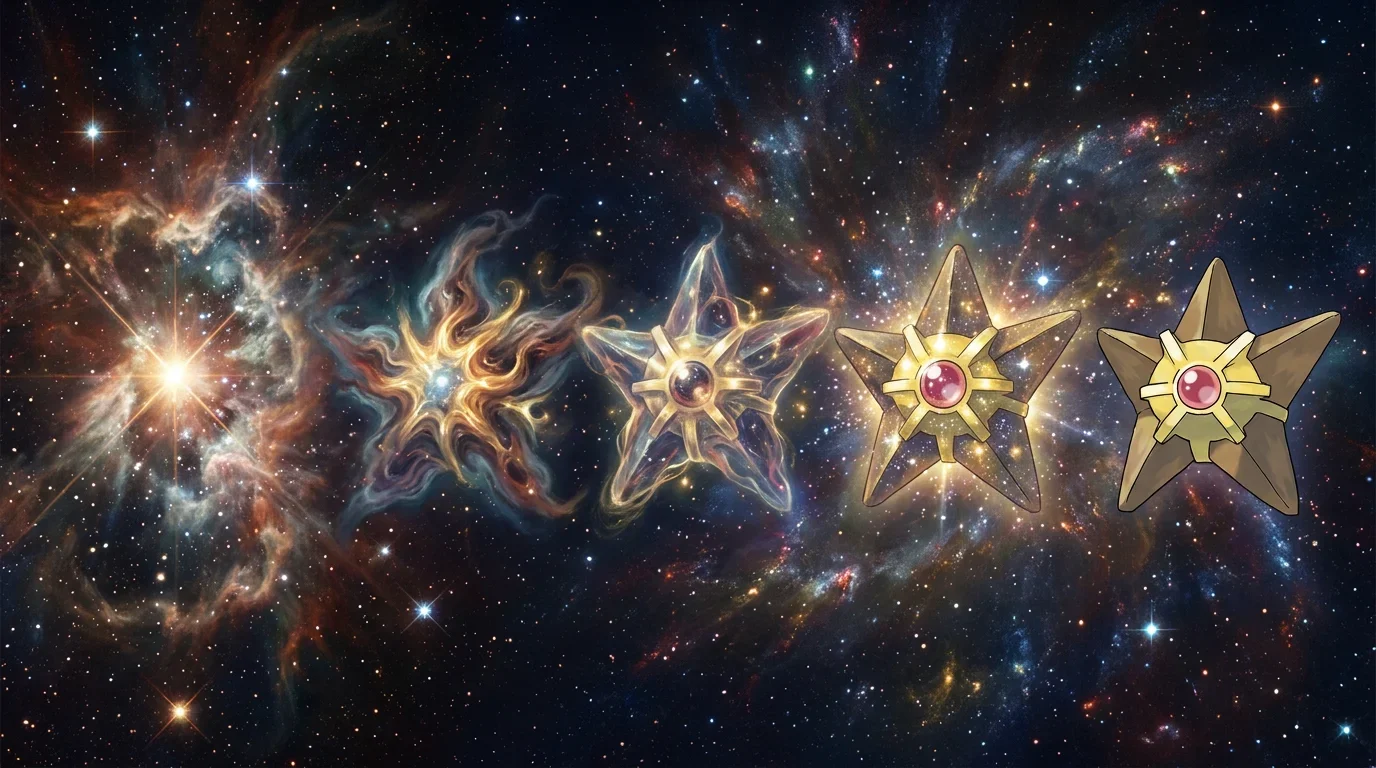
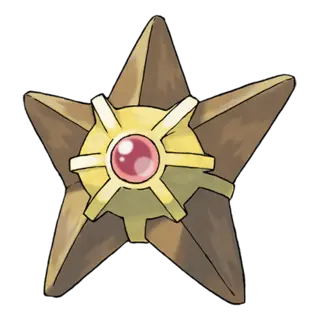
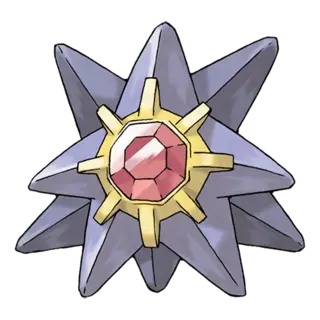
Staryu, the Star Shape Pokemon, is a stylized starfish, such as the common starfish or the necklace starfish with its vivid red center surrounded by bright plates. Real starfish can regenerate lost body parts, and so can Staryu. Its ties to outer space and its ability to emit light mean it may also be based on literal stars and meteors.
Fish Pokemon nibble at it without bothering it, and its body regenerates quickly even if part of it is completely torn off. It stands 0.8 m tall and weighs 34.5 kg.
#121
Starmie
#121
Type
WaterPsychic
Category
Mysterious Pokémon
National Dex
#0121
Debut
Gen I
Base stat total
520
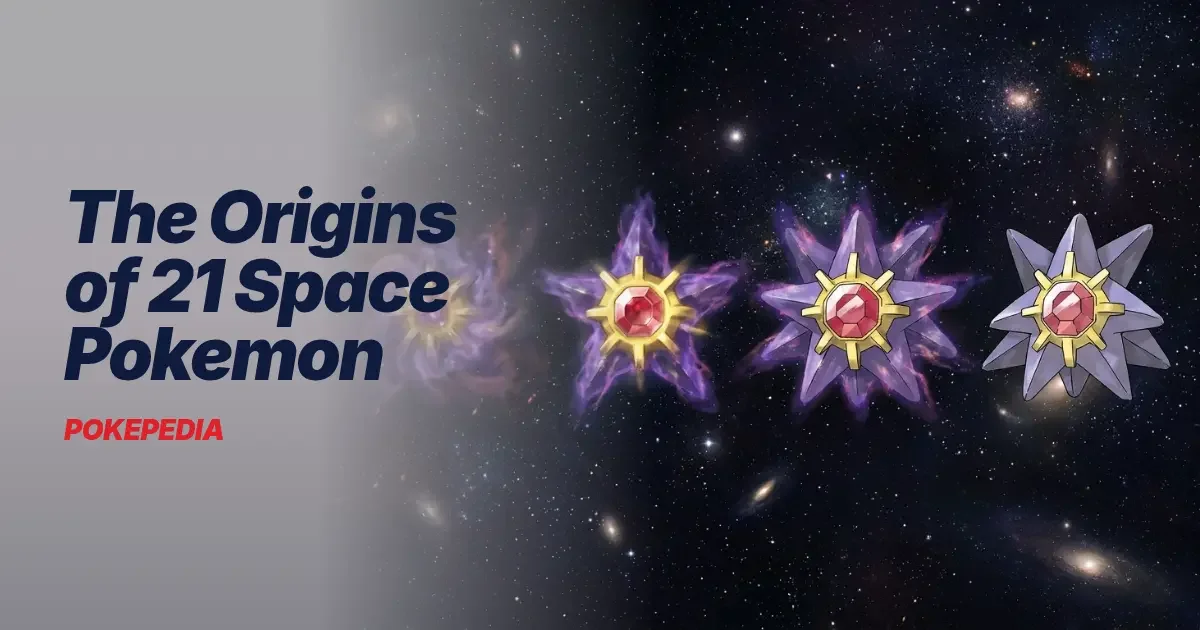
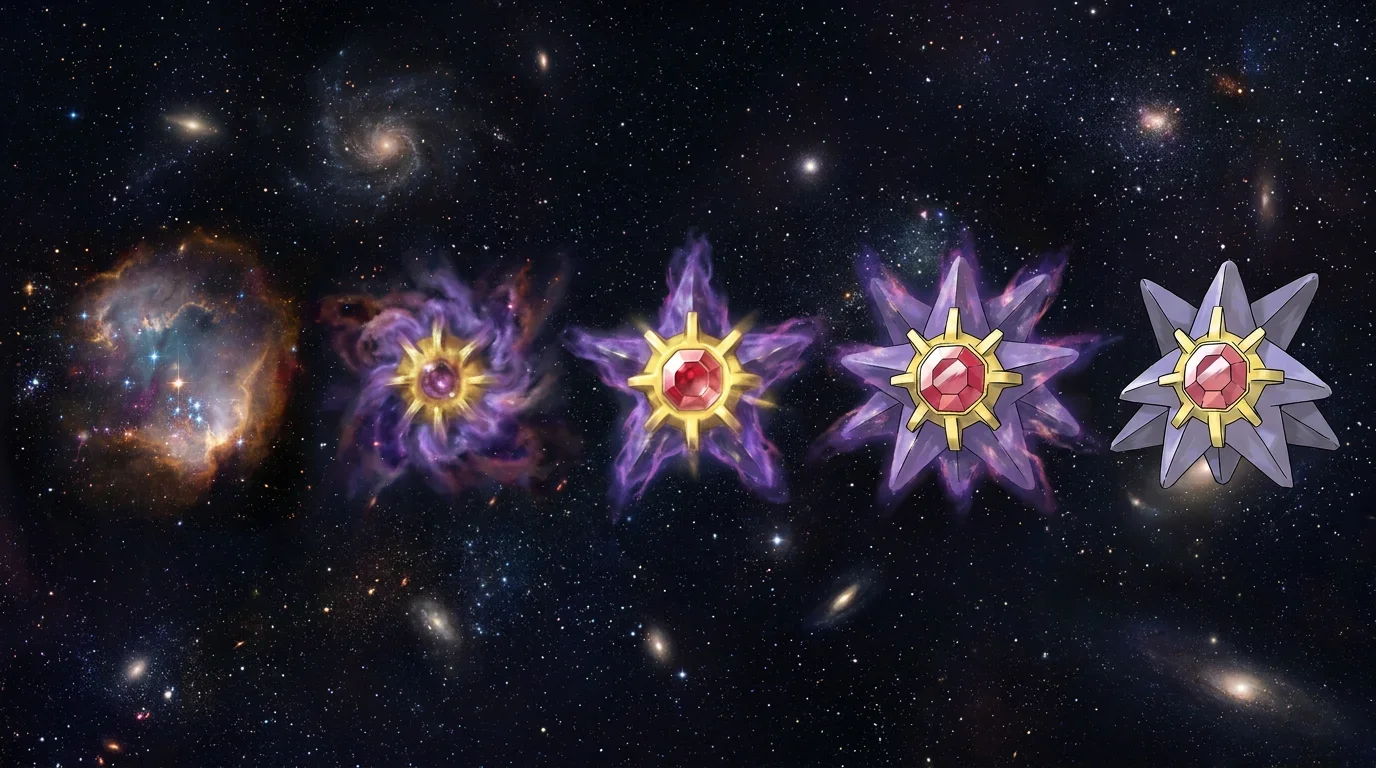
Starmie, the Mysterious Pokemon, is a stylized starfish, and its color and many arms point to the purple sea star and the sunflower sea star. Like Staryu, it may also be based on literal stars and meteors, and its central core resembles a faceted gem mounted inside a golden prong setting.
It swims by spinning its body at high speed and absorbs tiny plankton as it cruises through the ocean. It stands 1.1 m tall and weighs 80 kg.
#337
Lunatone
#337
Type
RockPsychic
Category
Meteorite Pokémon
National Dex
#0337
Debut
Gen III
Base stat total
460
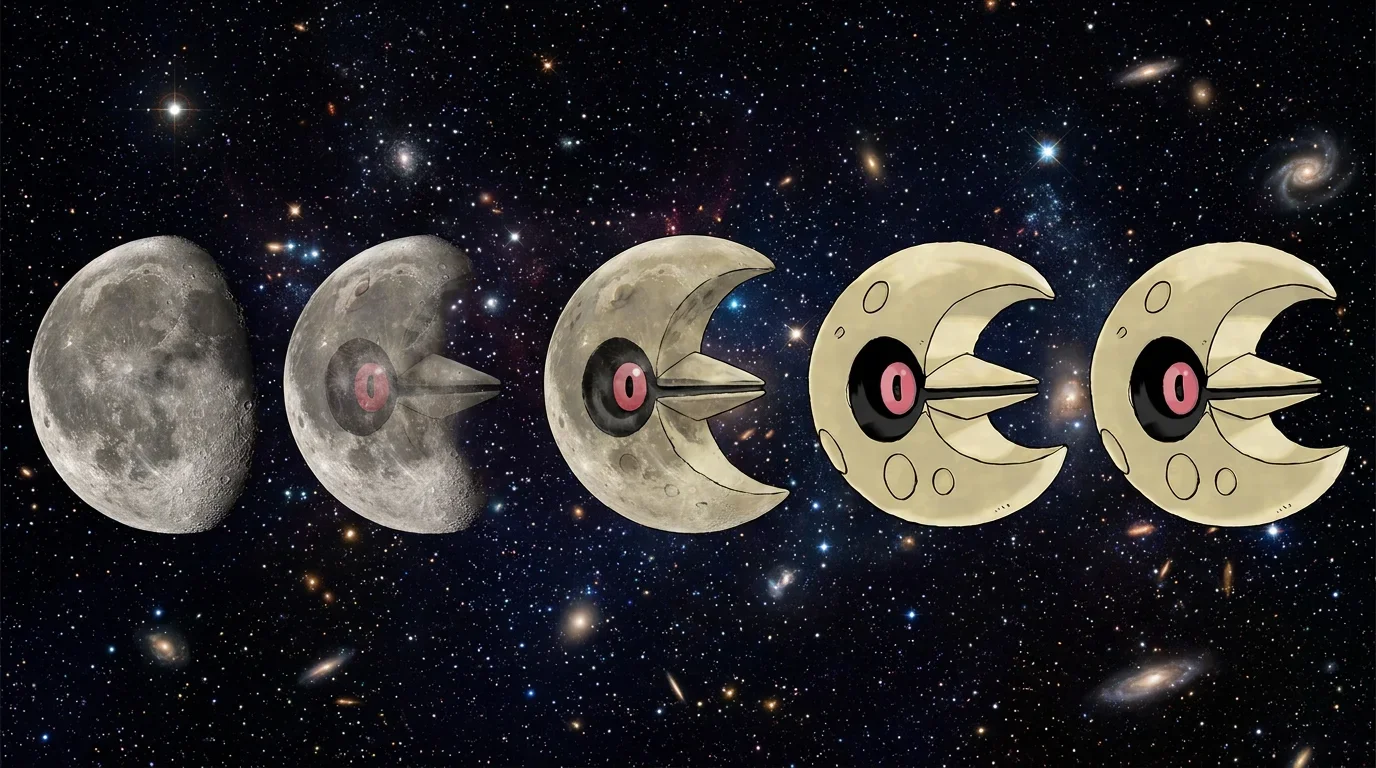
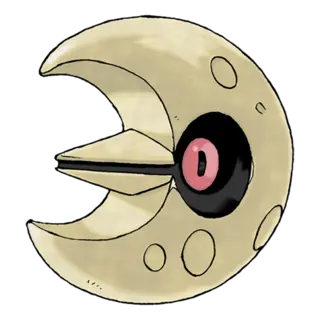
Lunatone, the Meteorite Pokemon, is based on a crescent moon and a meteorite. It might also pull from the Man in the Moon, a figure imagined from the patterns on the moon's surface. It and Solrock may draw inspiration from the sun and moon cards in tarot, which are traditionally shown with human-like facial features.
It was discovered at the site of a meteor strike 40 years ago, and its stare can lull foes to sleep. It stands 1 m tall and weighs 168 kg.
#338
Solrock
#338
Type
RockPsychic
Category
Meteorite Pokémon
National Dex
#0338
Debut
Gen III
Base stat total
460
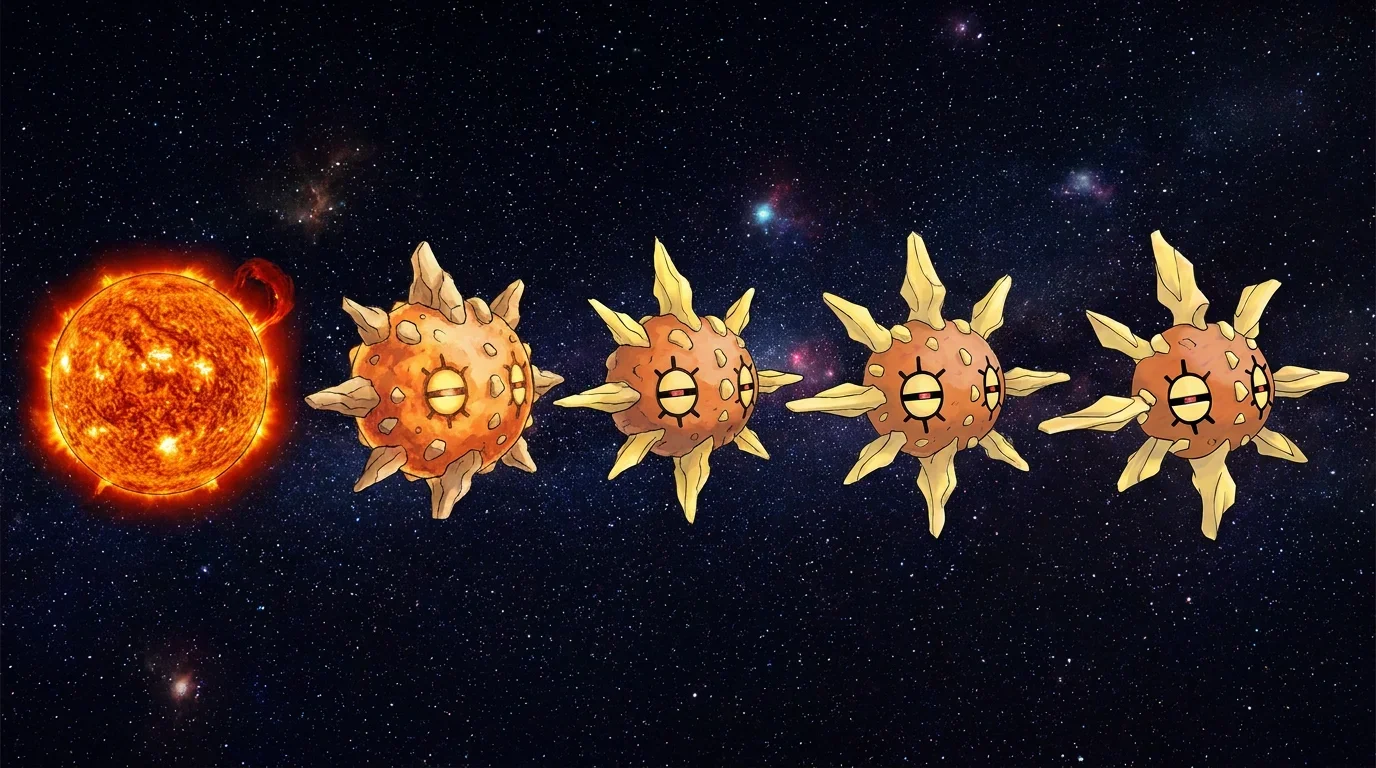
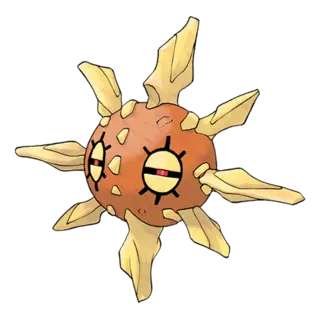
Solrock, another Meteorite Pokemon, is based on the Sun and a meteorite. Its squinted eyes may allude to the difficulty of looking directly at the Sun, and they also resemble the slits in traditional sunlight-blocking snow goggles. Its shiny coloration might be a reference to red dwarf stars.
Solar energy is the source of its power, so it is strong during the daytime, and its body shines when it spins. It stands 1.2 m tall and weighs 154 kg.
#385
Jirachi
#385
Type
SteelPsychic
Category
Wish Pokémon
National Dex
#0385
Debut
Gen III
Base stat total
600
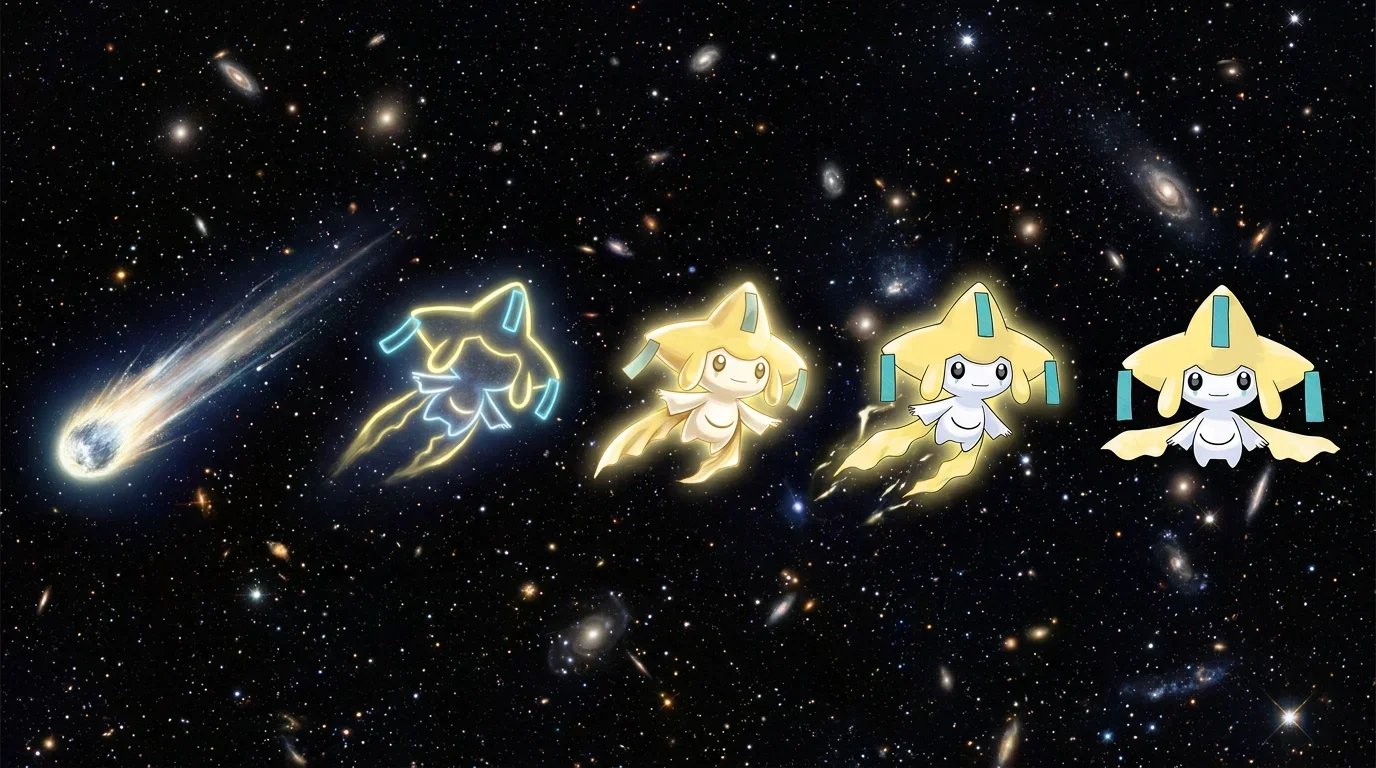
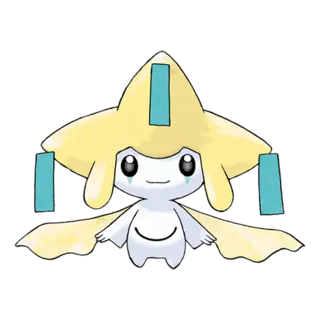
Jirachi, the Wish Pokemon, is based on the concept of wishing upon a star, the practice of making a wish while watching meteors in the night sky. Its pointed head is shaped like a literal star, and its Steel type may be a reference to iron meteorites. The paper tags on its head resemble tanzaku, strips of paper on which wishes are written during the Japanese festival Tanabata. The fact that it is awake for only 7 days may refer to how that festival always takes place on the 7th day of the 7th lunar month.
It is believed to grant any wishes written on the notes on its head when it wakes from its 1,000-year slumber. It stands 0.3 m tall and weighs 1.1 kg.
#386
Deoxys
#386
Type
Psychic
Category
DNA Pokémon
National Dex
#0386
Debut
Gen III
Base stat total
600
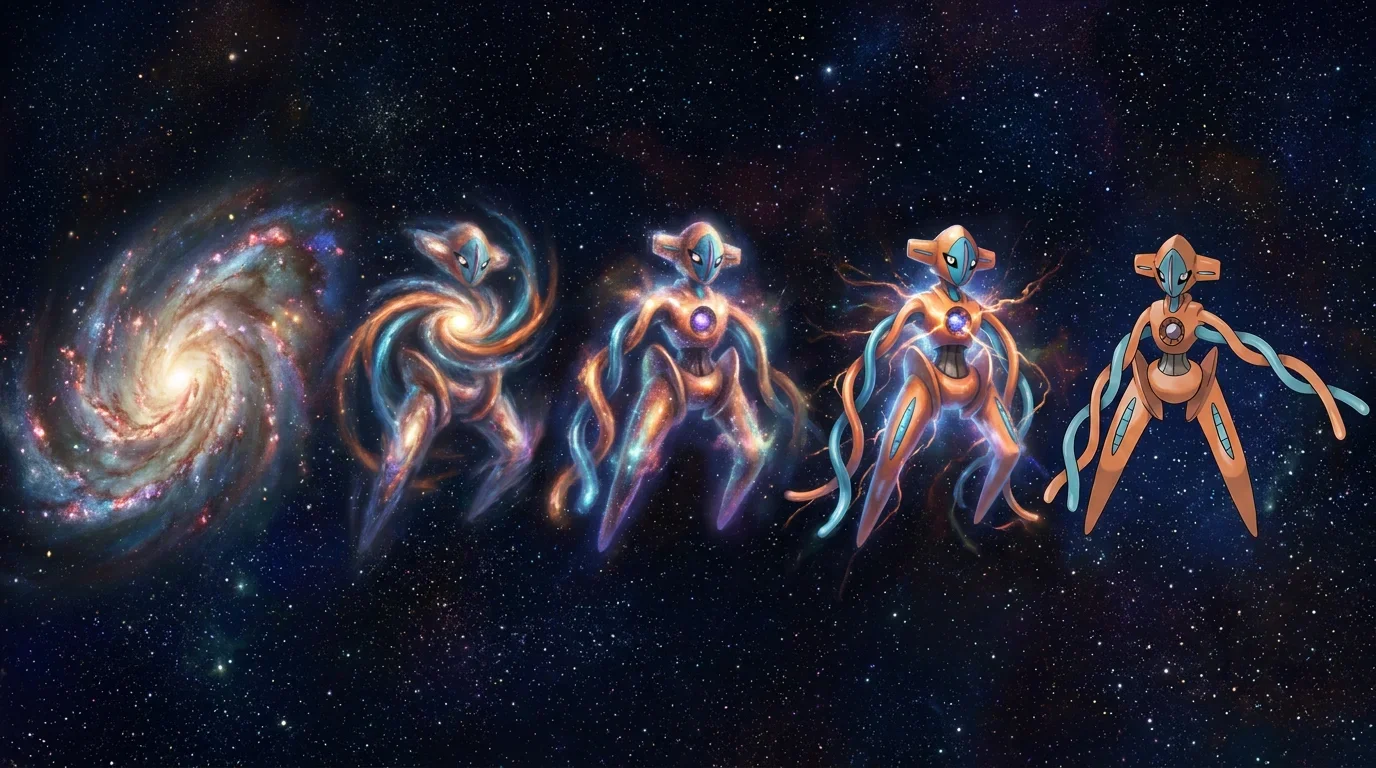
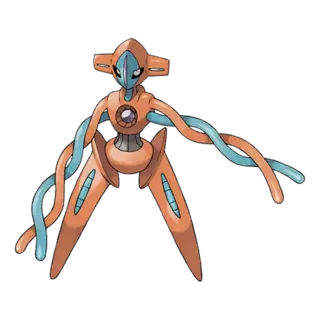
Deoxys, the DNA Pokemon, is tied to meteorites, since it is called "an alien virus that fell to earth on a meteor". That suggests panspermia, the idea that life itself is extraterrestrial and arrived on Earth through celestial objects. Its design also draws on representations of aliens and the double helix of DNA.
It emerged from a virus that came from space. It stands 1.7 m tall and weighs 60.8 kg, which is small for something that arrived on a meteor.
#488
Cresselia
#488
Type
Psychic
Category
Lunar Pokémon
National Dex
#0488
Debut
Gen IV
Base stat total
580
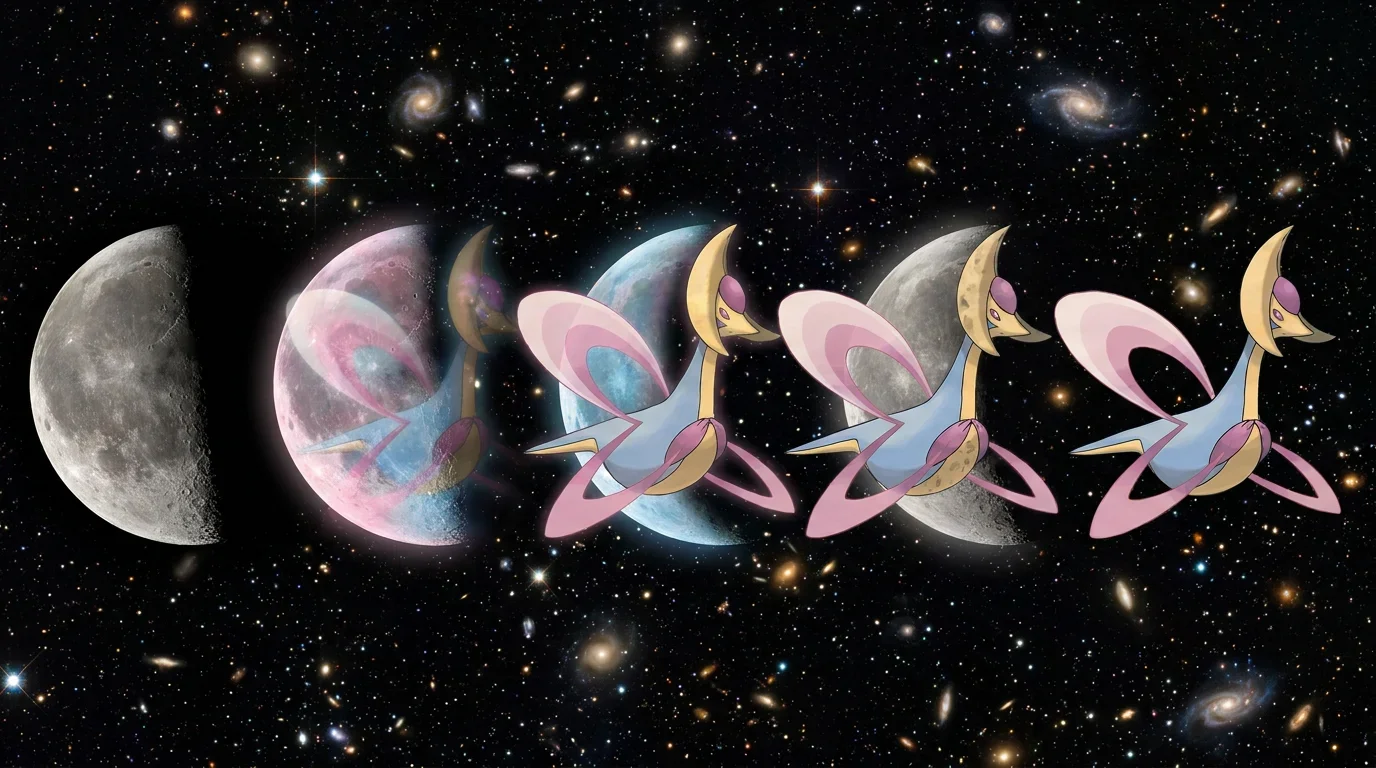
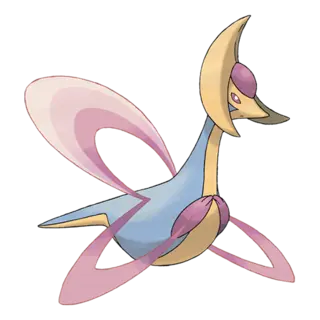
Cresselia, the Lunar Pokemon, is based on a swan or a crane and on a xiannu, the Chinese counterpart of the Japanese tennyo, a heavenly maiden. Given its lunar motif, it could specifically be based on Chang'e, the goddess of the Moon in Chinese mythology, or on other moon goddesses such as Selene. Its wings and the aurora near its tail resemble planetary rings.
It is reminiscent of the crescent moon and leaves a brilliant line of light in its wake as it flies across the night sky. It stands 1.5 m tall and weighs 85.6 kg.
#605
Elgyem
#605
Type
Psychic
Category
Cerebral Pokémon
National Dex
#0605
Debut
Gen V
Base stat total
335
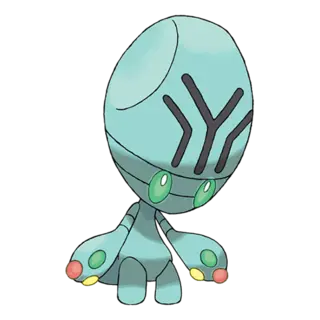
Elgyem, the Cerebral Pokemon, gets its place here from its head. The depressions where its ears should be look like craters on faraway planets, and it is based on greys, one of the more popular kinds of alien. The round, colored fingers on its hands resemble the colorful faces of the invaders in the 1953 film War of the Worlds.
It was discovered about 50 years ago and its highly developed brain lets it exert psychic powers. It stands 0.5 m tall and weighs 9 kg.
#637
Volcarona
#637
Type
BugFire
Category
Sun Pokémon
National Dex
#0637
Debut
Gen V
Base stat total
550
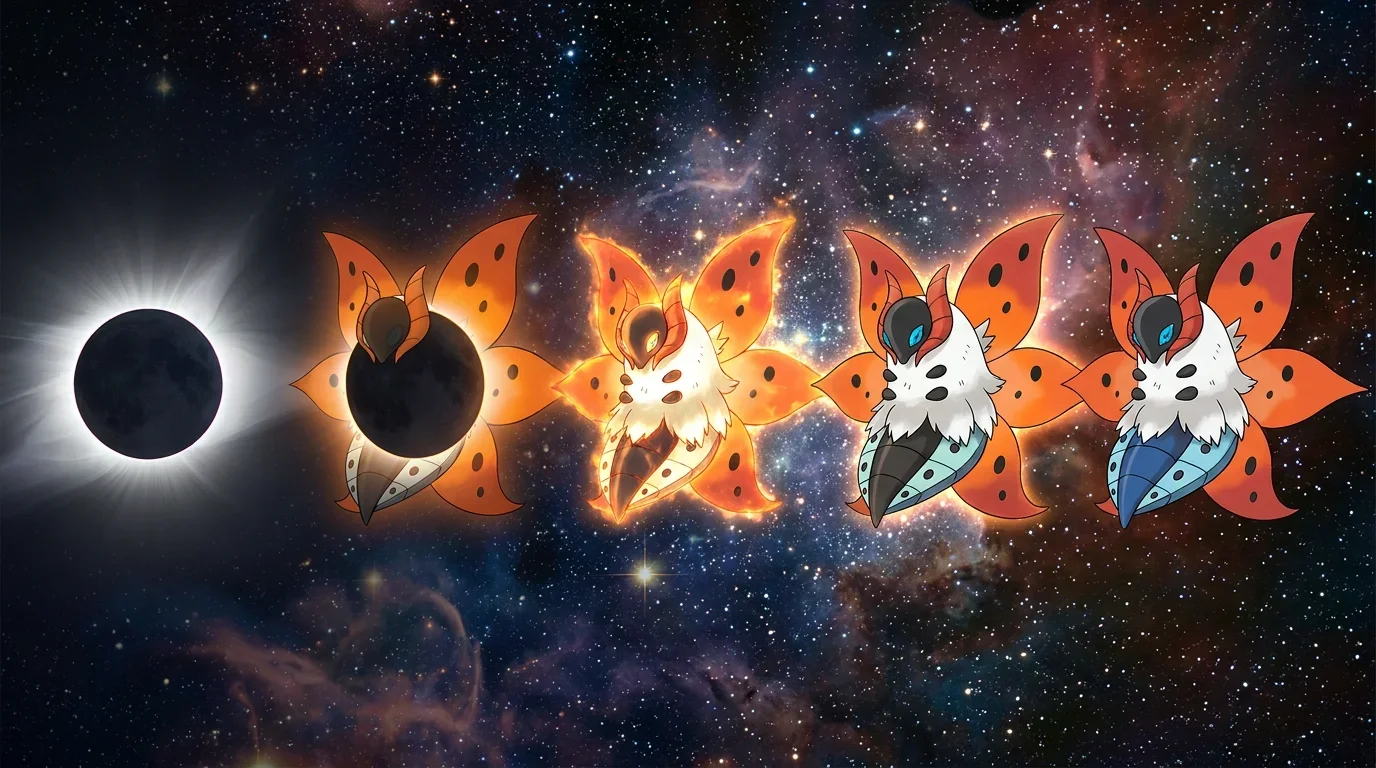
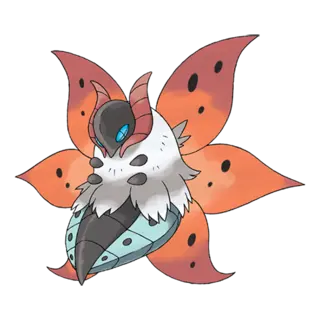
Volcarona, the Sun Pokemon, may be based on the garden tiger moth, called the fire tiger moth in Japan, and on various solar deities. The moth is linked to a Japanese proverb about the summer insect that flies into the fire. Its wings resemble the sun and sunspots, and its eyes resemble sun crosses.
It emerges from a cocoon formed of raging flames and ancient murals depict it as a deity of fire. It stands 1.6 m tall and weighs 46 kg.
#748
Toxapex
#748
Type
PoisonWater
Category
Brutal Star Pokémon
National Dex
#0748
Debut
Gen VII
Base stat total
495
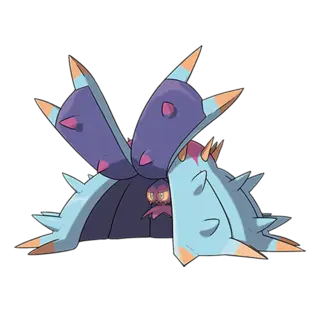
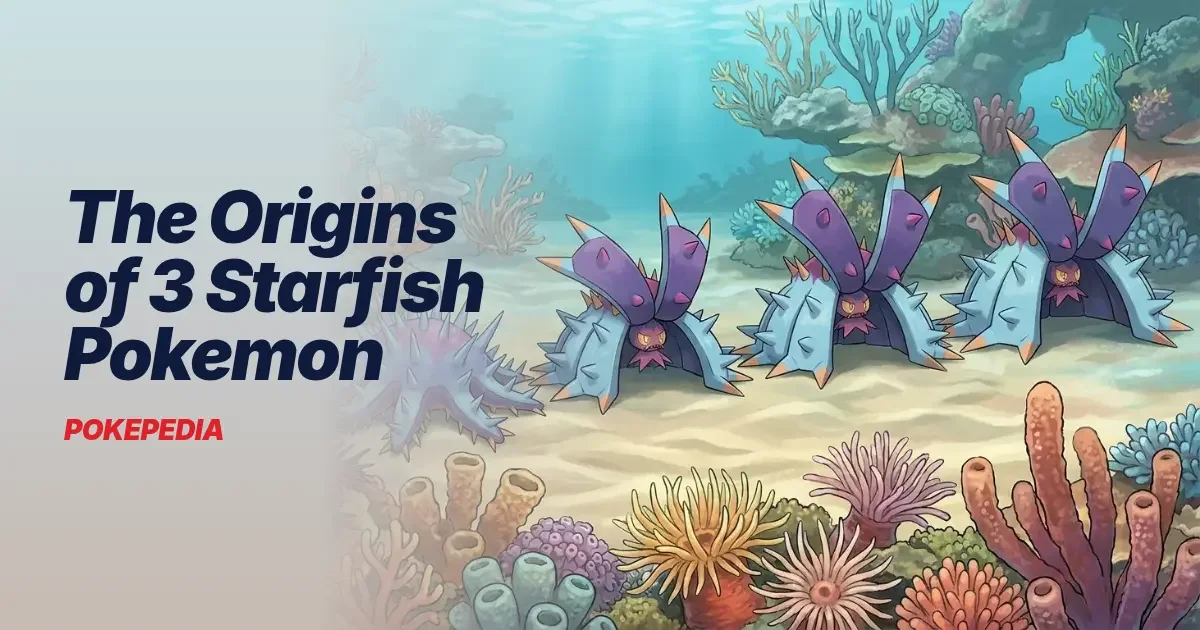
Toxapex, the Brutal Star Pokemon, is here for its category, because its design comes from the sea. It may be based on a crown-of-thorns starfish, an invasive and venomous echinoderm that has dismantled numerous reef ecosystems by preying on coral polyps, much as Toxapex preys on Corsola. The pointy top of its head is based on a crown.
The poison in its sac is so toxic that Pokemon as large as Wailord will still be suffering three days after it first takes effect. It stands 0.7 m tall and weighs 14.5 kg.
#774
Minior
#774
Type
RockFlying
Category
Meteor Pokémon
National Dex
#0774
Debut
Gen VII
Base stat total
440
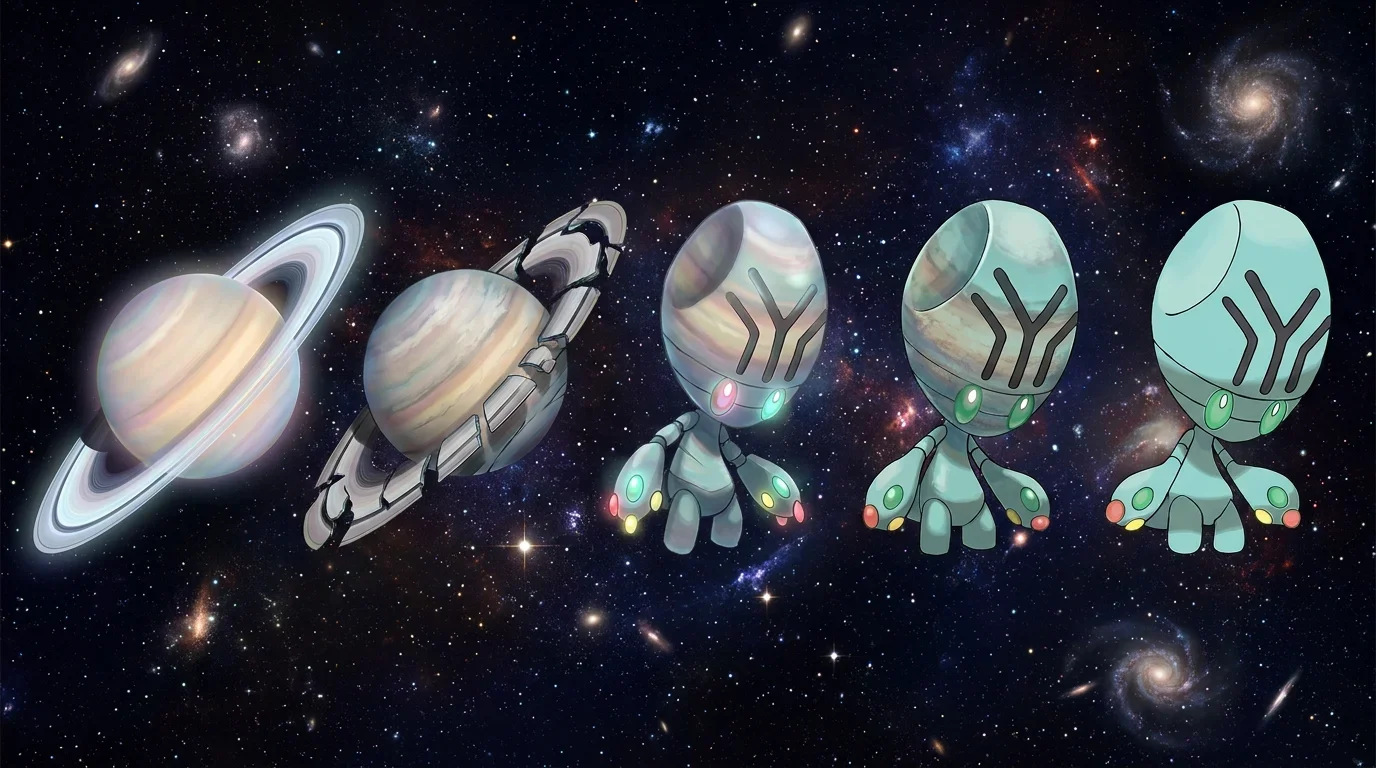
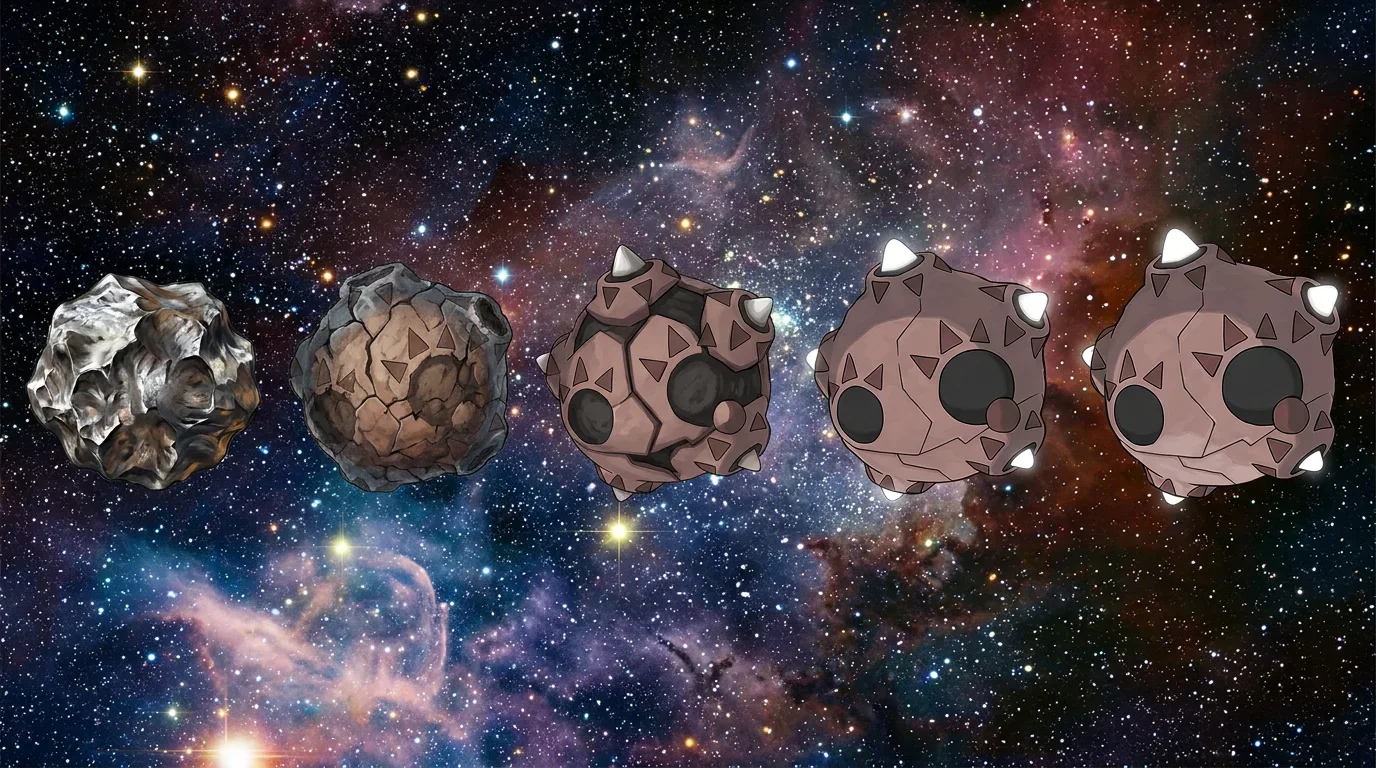
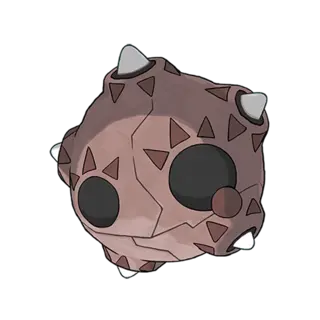
Minior, the Meteor Pokemon, is based on meteors, which are colloquially known as "falling stars" or "shooting stars". The colors of its exposed core match those of a classic rainbow. Its core design may take inspiration from the Portuguese and Japanese star-shaped candy konpeito, and its Meteor Form could be a reference to gashapon capsule machines, where the toy inside is a surprise until the capsule is opened.
Its outer shell is uncommonly durable, but the shock of falling to the ground smashes the shell to smithereens. It stands 0.3 m tall and weighs 40 kg.
#789
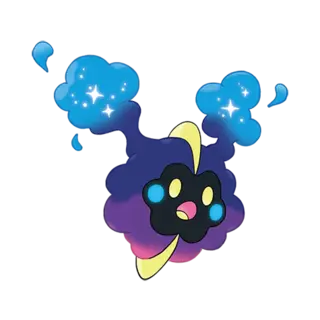
Cosmog
#789
Type
Psychic
Category
Nebula Pokémon
National Dex
#0789
Debut
Gen VII
Base stat total
200
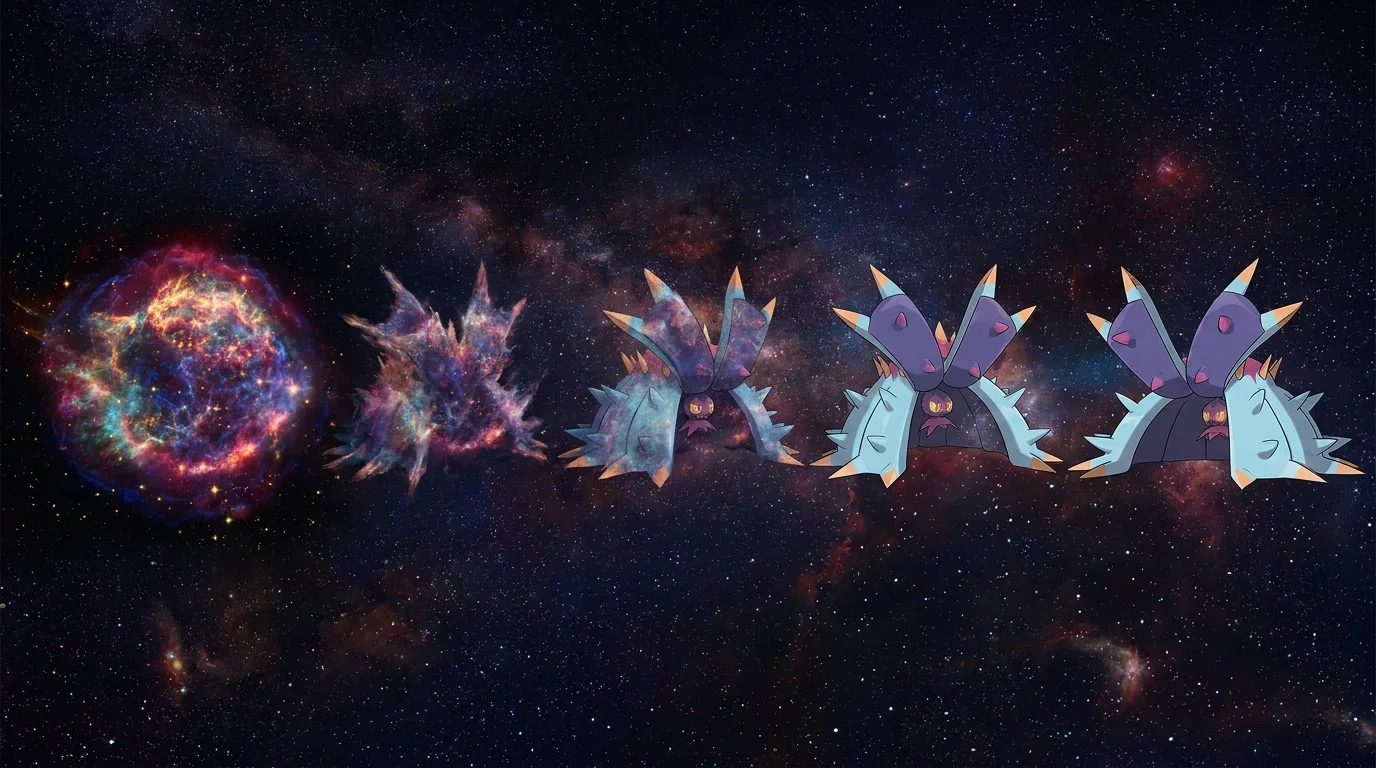
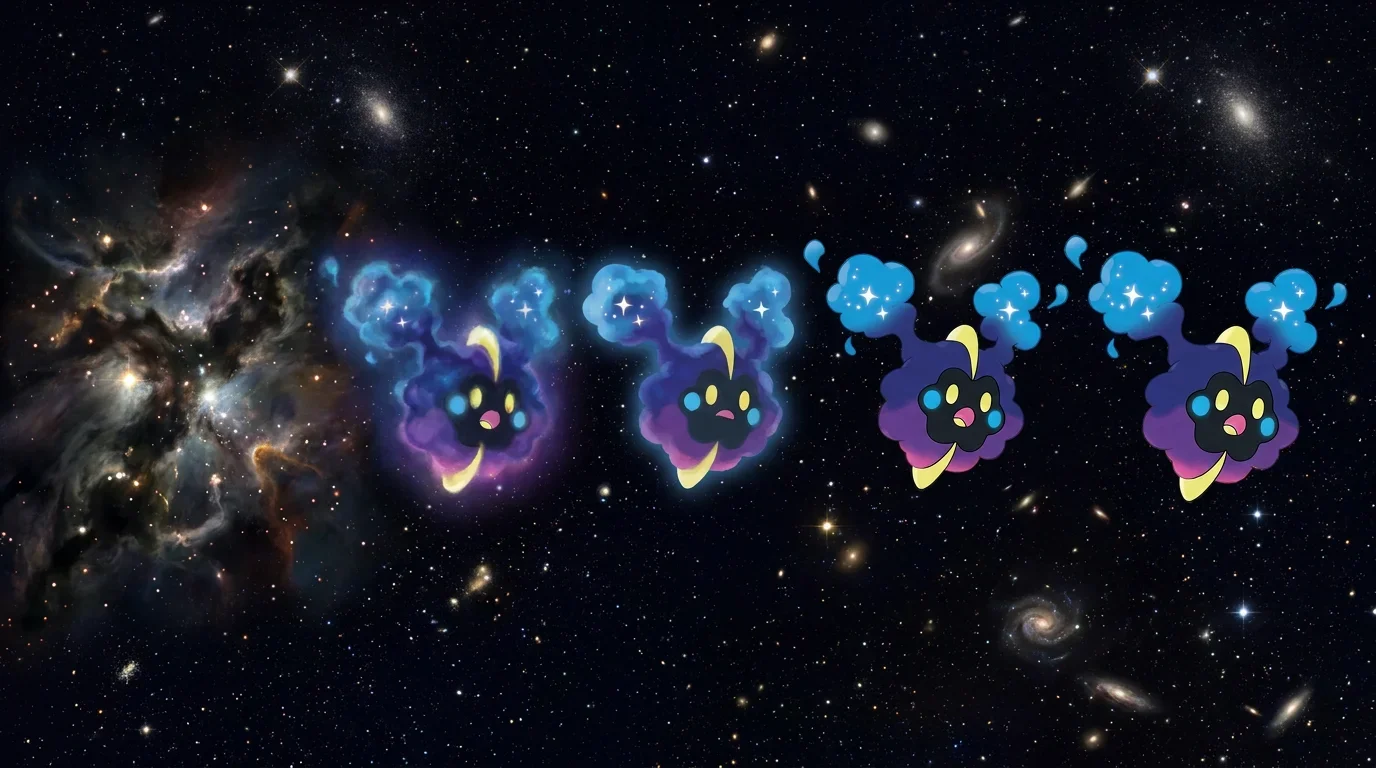
Cosmog, the Nebula Pokemon, may be based on a molecular cloud, a type of nebula where star formation occurs.
It is very curious but not very cautious, often placing itself in danger, and it teleports away when things start to look dicey. It stands 0.2 m tall and weighs 0.1 kg.
#790
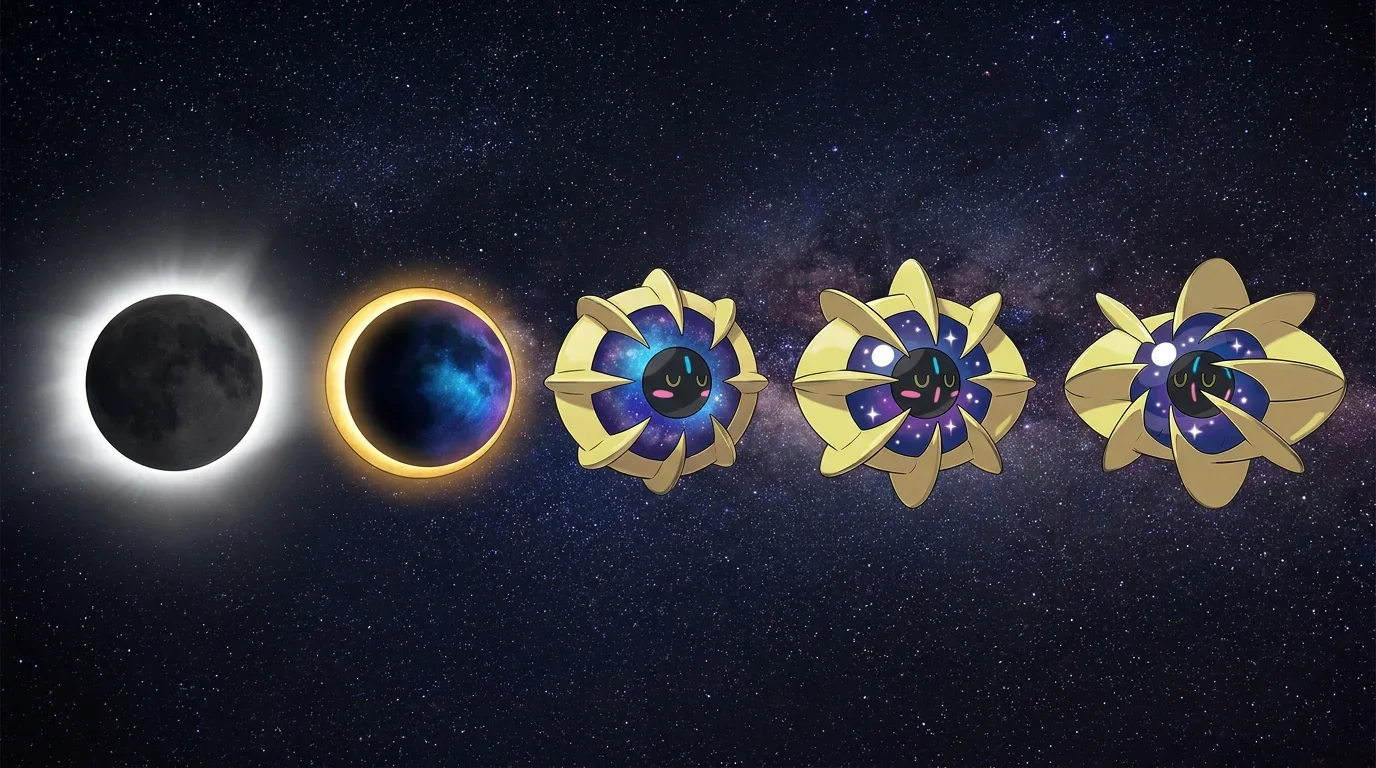
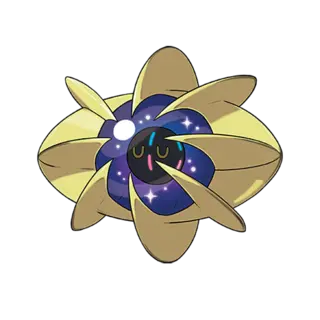
Cosmoem
#790
Type
Psychic
Category
Protostar Pokémon
National Dex
#0790
Debut
Gen VII
Base stat total
400
Cosmoem, the Protostar Pokemon, has characteristics of both a stylized sun and a stylized moon, with rays and a pair of crescents. Its enormous weight for its tiny size shares similarities with super-compressed astronomical bodies such as black holes and neutron stars. Given its description, it seems to be an embodiment of star formation in general.
It sucks in dust from the air at an astounding rate, frantically building up energy within its core as preparation for evolution. It stands 0.1 m tall and weighs 999.9 kg.
#791
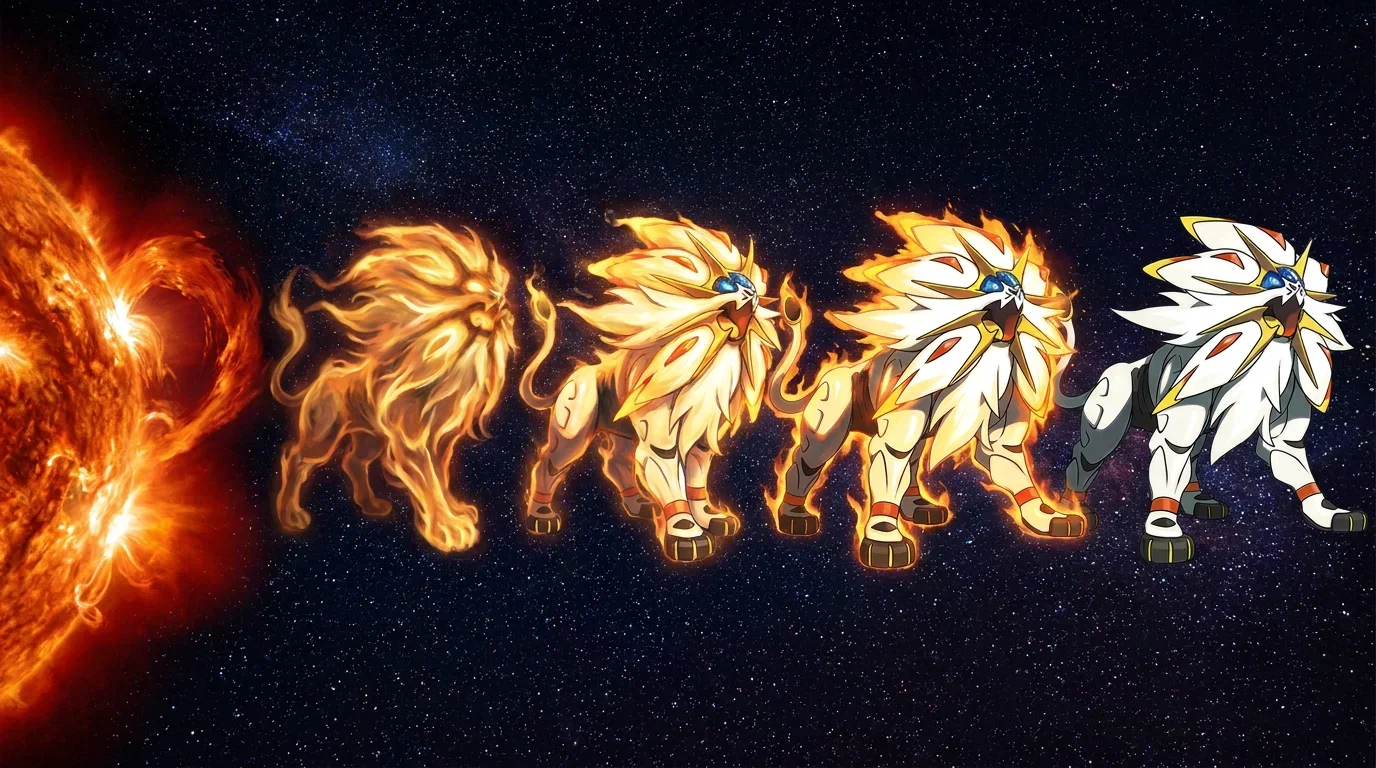
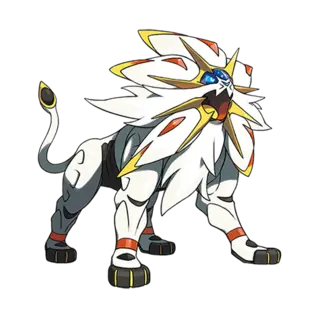
Solgaleo
#791
Type
PsychicSteel
Category
Sunne Pokémon
National Dex
#0791
Debut
Gen VII
Base stat total
680
Solgaleo, the Sunne Pokemon, is a lion with a sun motif, a fairly common motif in many Western and Middle Eastern cultures. It might reference the alchemical lion, described as "devouring the sun", and in astrology the Sun rules the sign Leo. Its metallic body and white coloring with black accents may bring to mind space shuttles or space suits, and its glassy face resembles a space suit helmet.
It was once known as the Beast That Devours the Sun, and energy in the form of light radiates boundlessly from it. It stands 3.4 m tall and weighs 230 kg.
#792
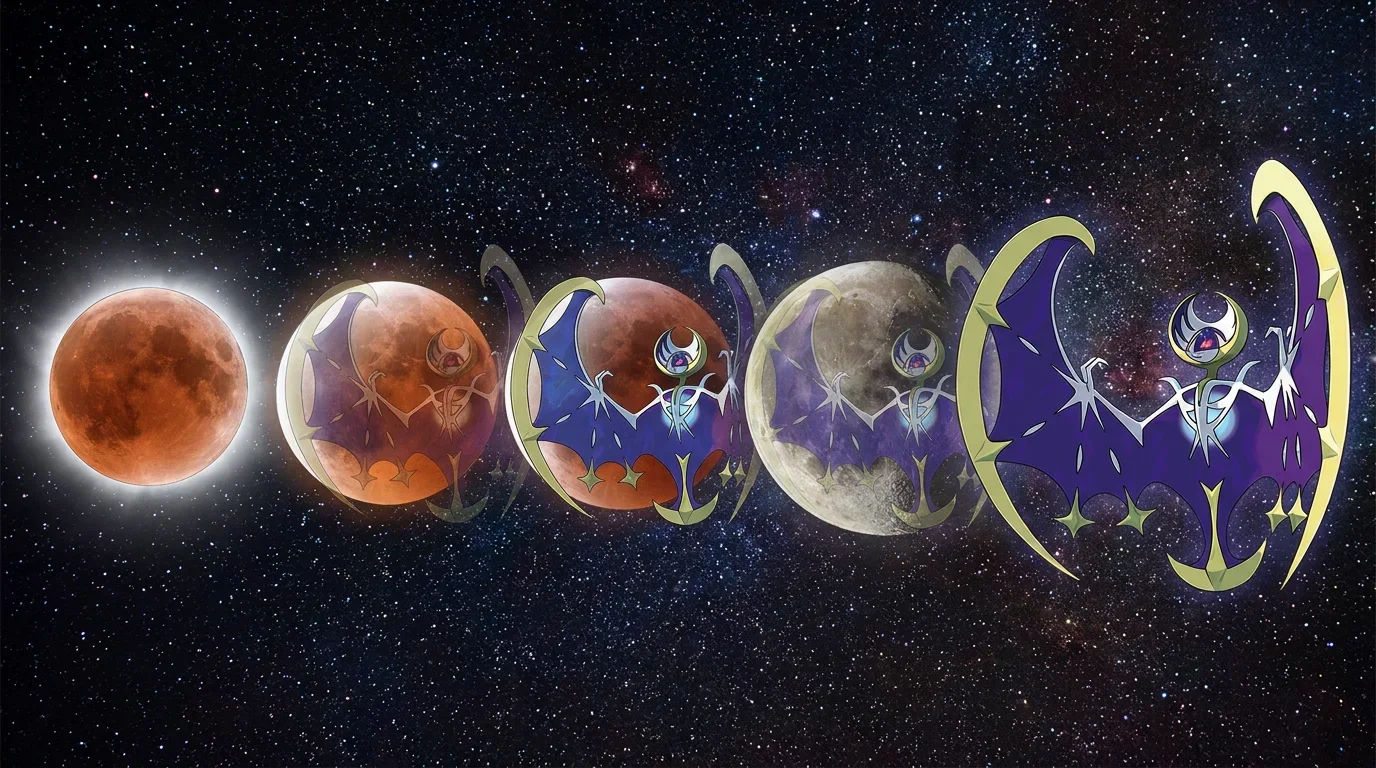
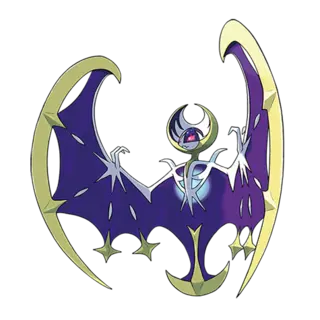
Lunala
#792
Type
PsychicGhost
Category
Moone Pokémon
National Dex
#0792
Debut
Gen VII
Base stat total
680
Lunala, the Moone Pokemon, is a bat with a Moon motif. It might reference the two known Hawaiian bat species, the Hawaiian hoary bat and the extinct Synemporion, or the ghost bat. The "Mahina-pea" cry Lunala makes in Pokemon Moon may come from the Hawaiian words for moon and bat, following the moon and bat motif.
It steals the light from its surroundings and then becomes the full moon, showering its own light across the night sky. It stands 4 m tall and weighs 120 kg.
#796
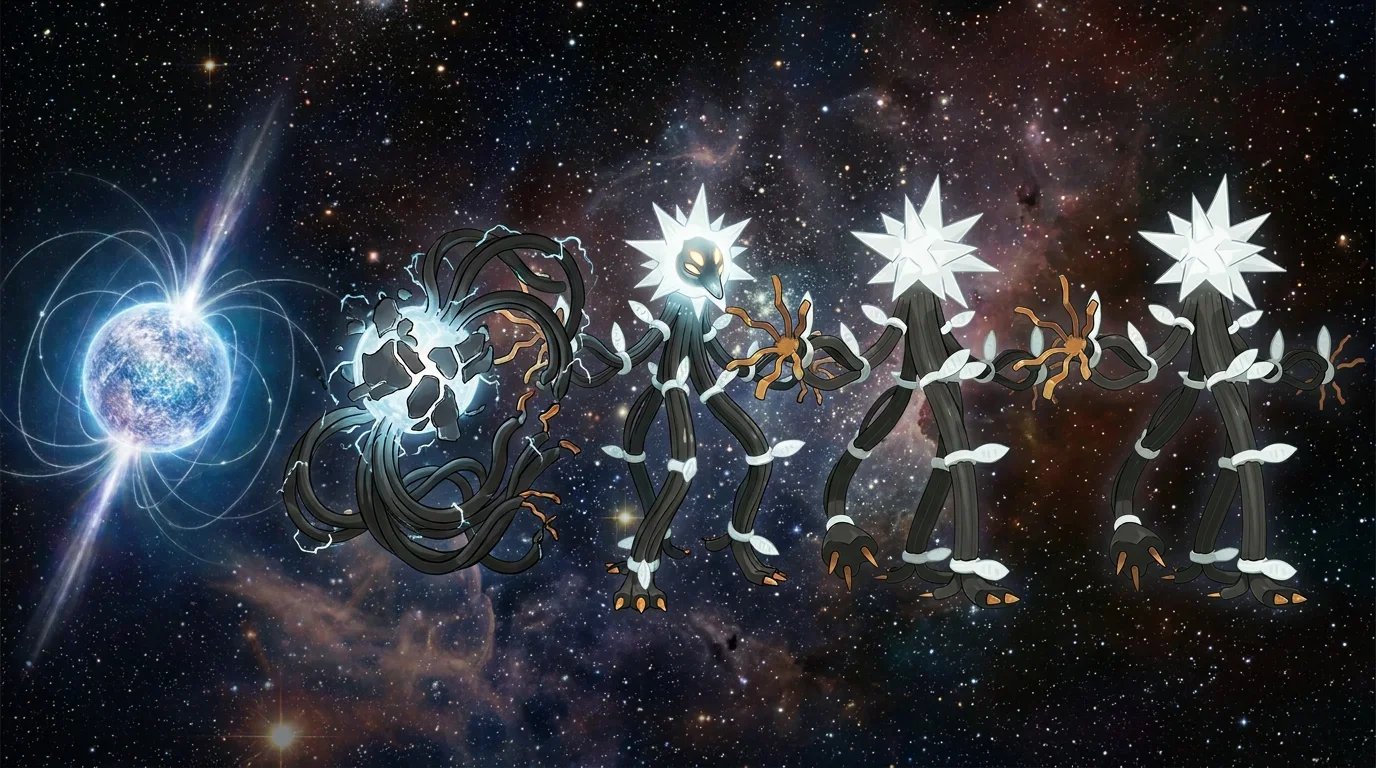
Xurkitree
#796
Type
Electric
Category
Glowing Pokémon
National Dex
#0796
Debut
Gen VII
Base stat total
570
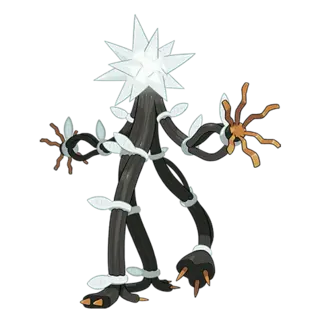
Xurkitree, the Glowing Pokemon, is based on sparking electrical wires and power lines. The three prongs at the end of its tail resemble a power plug, and its long fingers resemble copper wiring. Its head resembles a Moravian star or a tree-topper, and the white bands on its limbs may be fairy lights. The design may also be a visual pun on "live wire", a wire that is literally alive.
Ultra Beasts have been dubbed that way and some of them stand unmoving like trees with their arms and legs stuck into the ground. It stands 3.8 m tall and weighs 100 kg.
#797
Celesteela
#797
Type
SteelFlying
Category
Launch Pokémon
National Dex
#0797
Debut
Gen VII
Base stat total
570
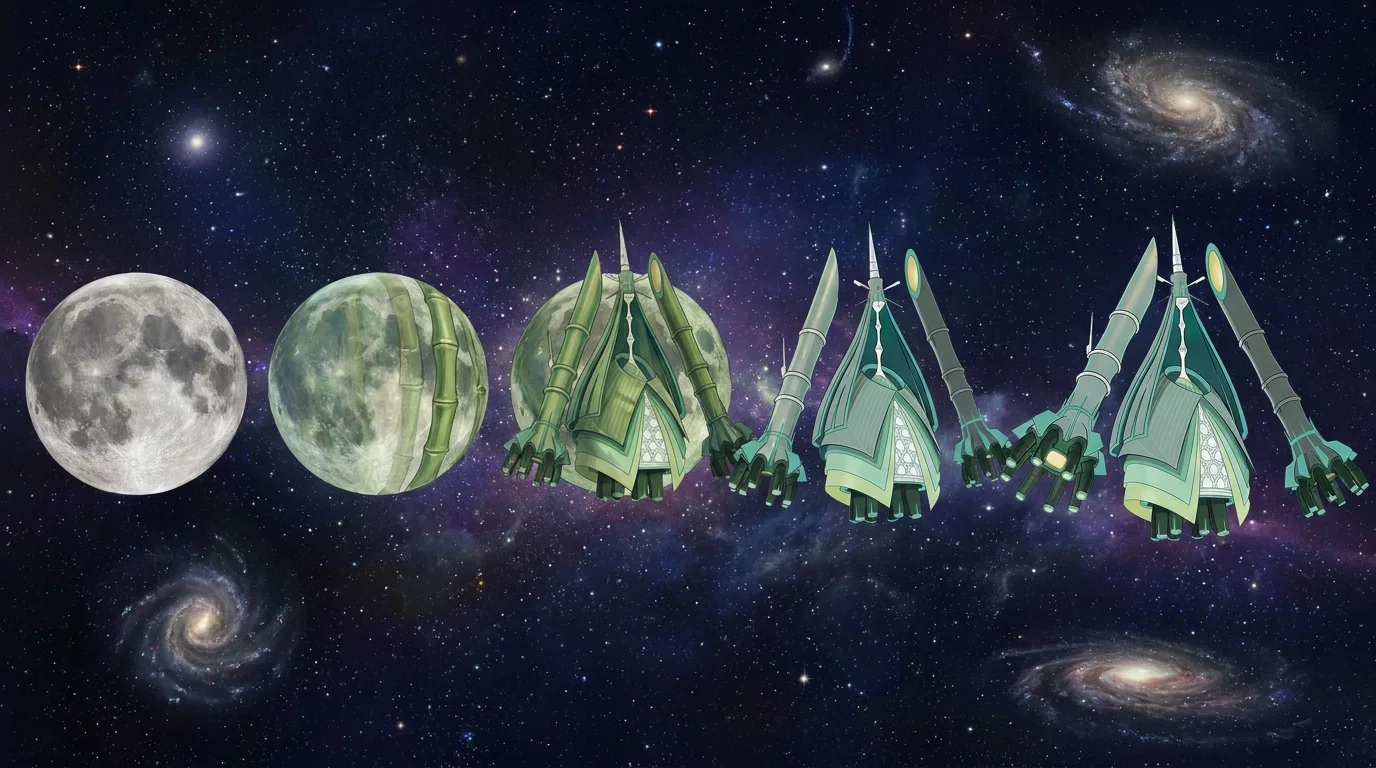
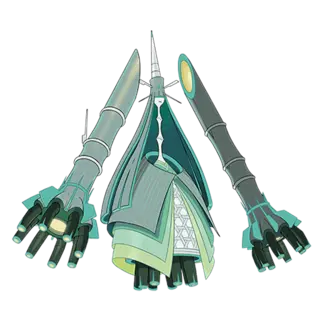
Celesteela, the Launch Pokemon, may be based on Princess Kaguya from The Tale of the Bamboo Cutter, who was found as a baby inside a bamboo stalk and was revealed to hail from the Moon. Its design seems to combine bamboo shoots and trunks with elements of a space shuttle. Celesteela is exclusive to Pokemon Moon and Ultra Moon, and its body may also resemble the spacecraft SELENE, nicknamed Kaguya in Japan, which orbited the Moon between 2007 and 2009.
It is alien to this world and a danger here, but apparently a common organism in the world where it normally lives. It stands 9.2 m tall and weighs 999.9 kg.
#799
Guzzlord
#799
Type
DarkDragon
Category
Junkivore Pokémon
National Dex
#0799
Debut
Gen VII
Base stat total
570
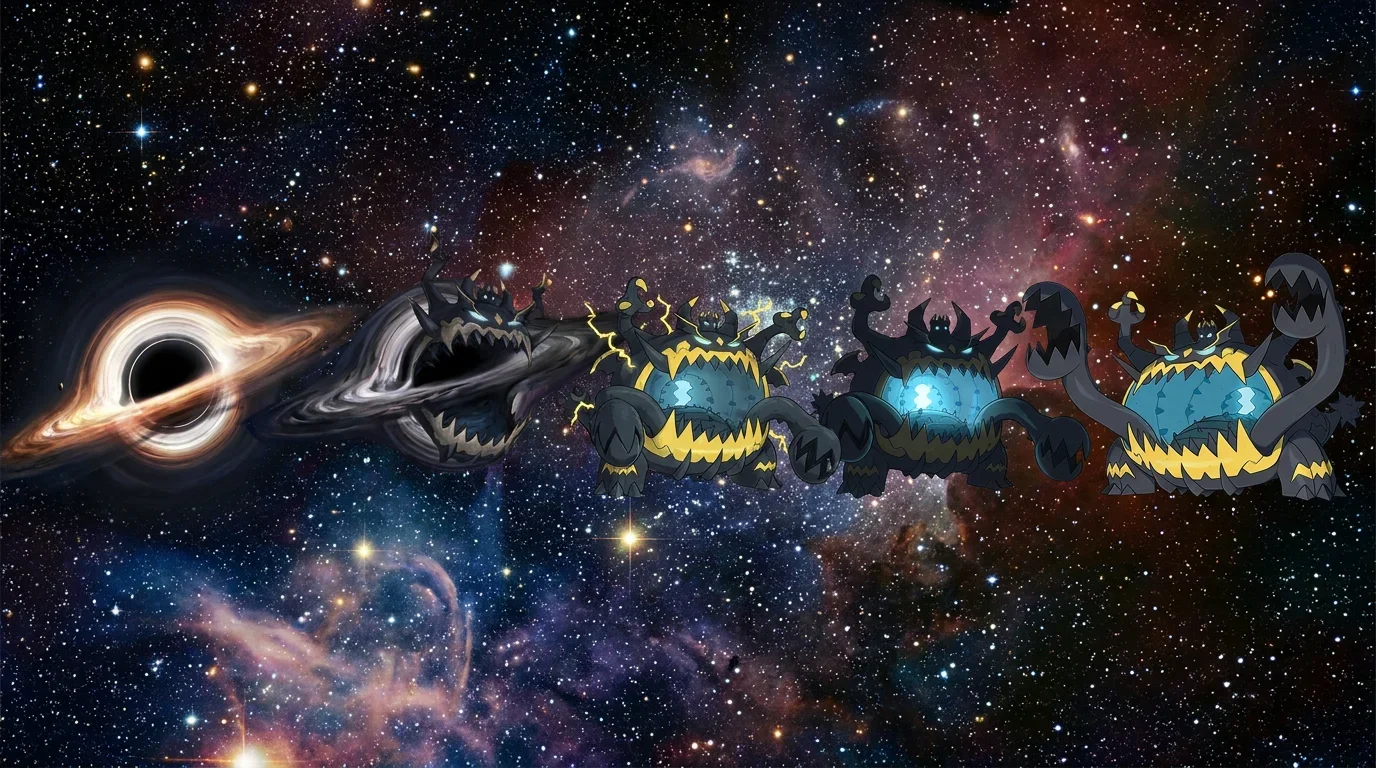
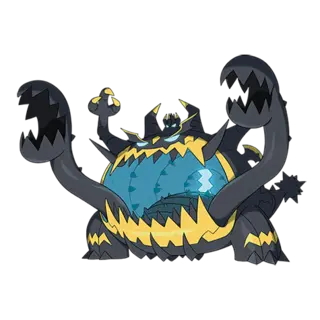
Guzzlord, the Junkivore Pokemon, is based on the abominations of Lovecraft's fiction and on the Agrajag creature of The Hitchhiker's Guide to the Galaxy. Its black and yellow coloration comes from earthmoving machinery. Because it eats almost anything and excretes nothing, it may also be based on a black hole, and its white Shiny color could be a reference to white holes.
It is an unknown life-form called a UB that may be constantly hungry and is certainly always devouring something. It stands 5.5 m tall and weighs 888 kg.
#904
Overqwil
#904
Type
DarkPoison
Category
Pin Cluster Pokémon
National Dex
#0904
Debut
Gen VIII
Base stat total
510
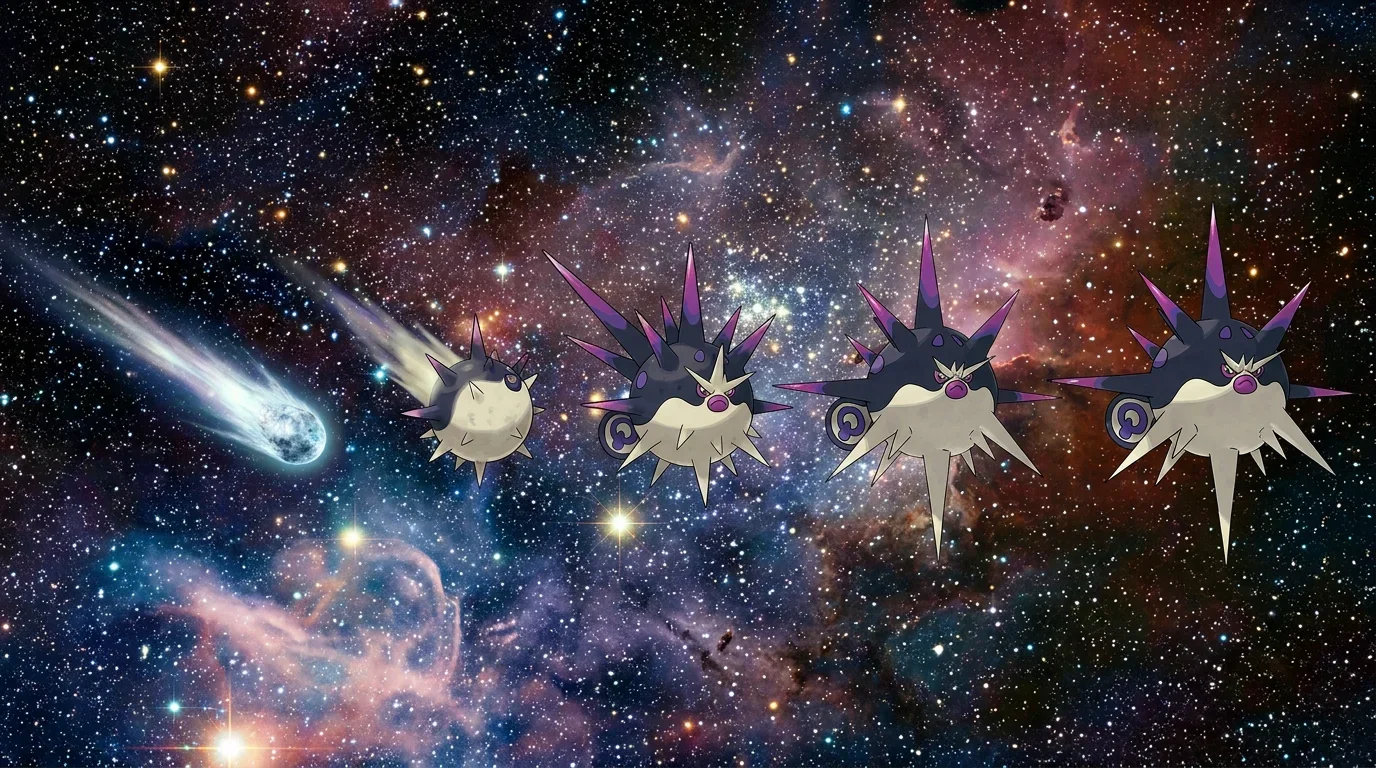
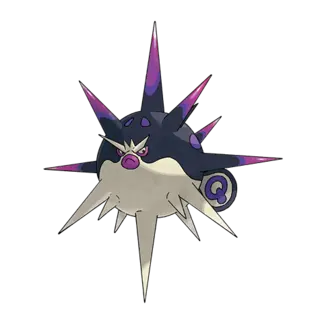
Overqwil, the Pin Cluster Pokemon, is the loosest fit on this list. Its design is a pufferfish or porcupinefish covered in spines. The star in its case is the morning star, a spiked weapon that its spines also resemble, along with the spiked end of a flail. Its Dark typing and poisonous diet may be based on the illegalization of the toxic fugu dish.
Its lancelike spikes and savage temperament have earned it the nickname "sea fiend", and it slurps up poison to nourish itself. It stands 2.5 m tall and weighs 60.5 kg.
#954
Rabsca
#954
Type
BugPsychic
Category
Rolling Pokémon
National Dex
#0954
Debut
Gen IX
Base stat total
470
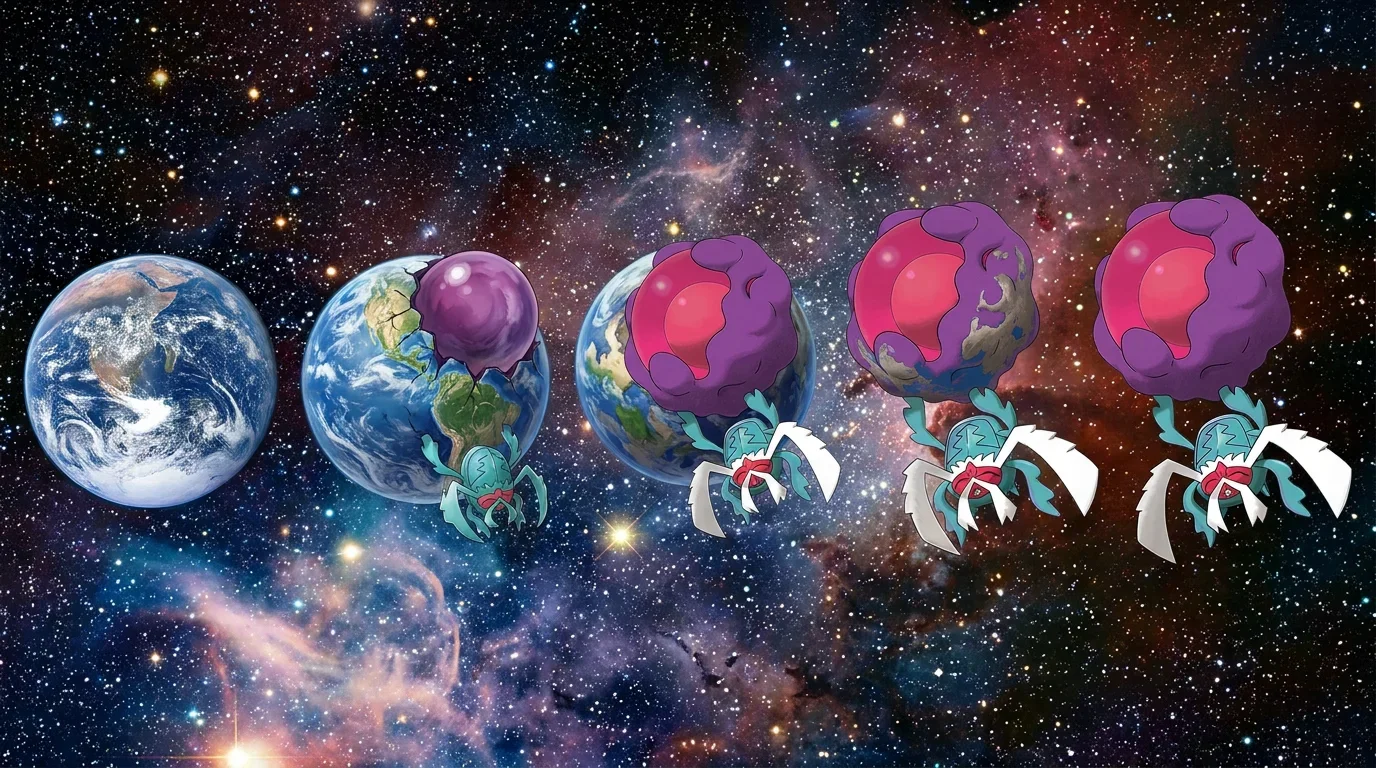
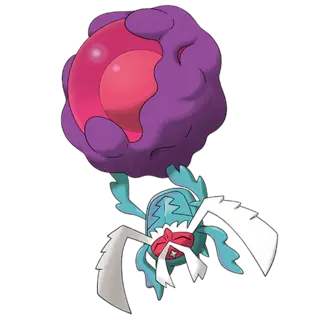
Rabsca, the Rolling Pokemon, is based on a scarab beetle, particularly the sacred scarab. It may also be based on Khepri, an Egyptian scarab-faced god who represents the rising or morning sun, and by extension creation and the renewal of life. That is represented by Rabsca learning Revival Blessing. The white star on its forehead resembles an urna.
An infant sleeps inside the ball, and Rabsca rolls the ball soothingly with its legs. It stands 0.3 m tall and weighs 3.5 kg.
#994
Iron Moth
#994
Type
FirePoison
Category
Paradox Pokémon
National Dex
#0994
Debut
Gen IX
Base stat total
570
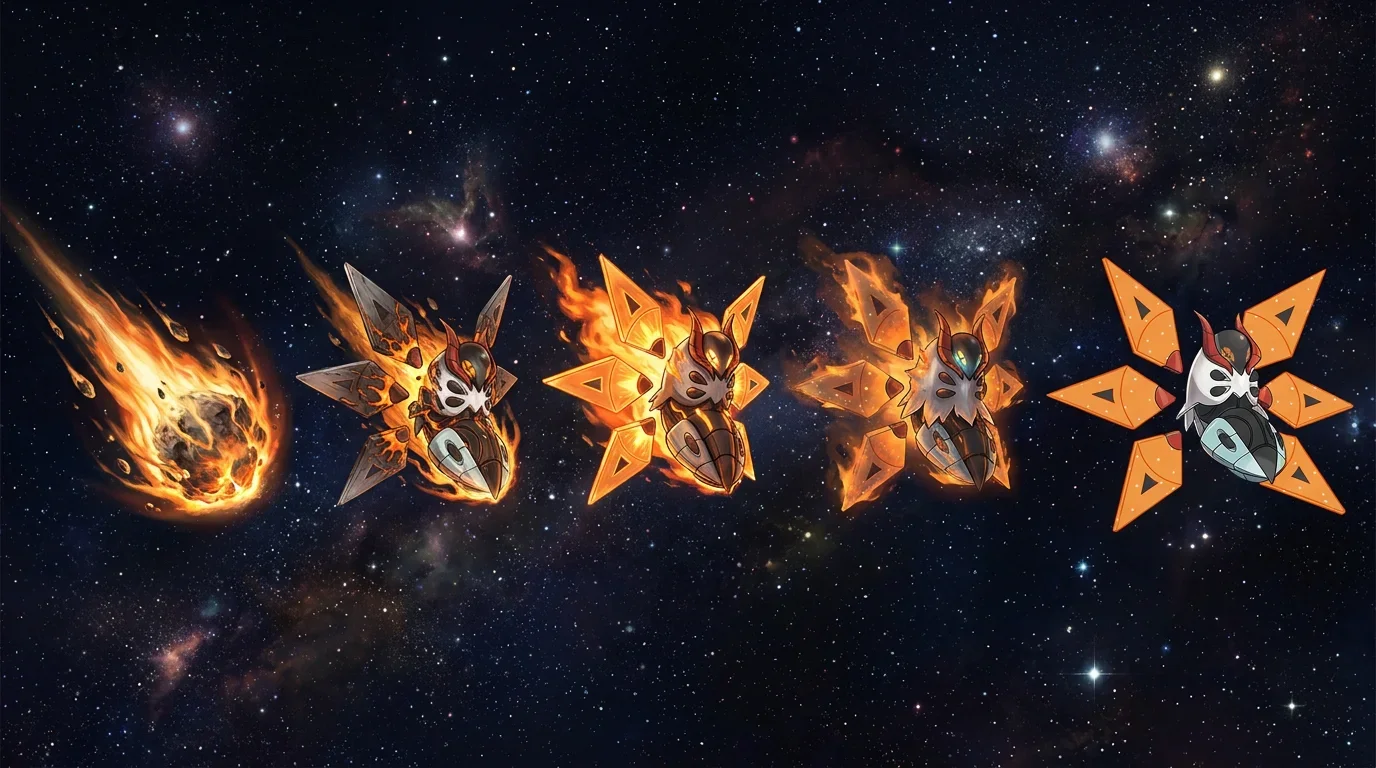
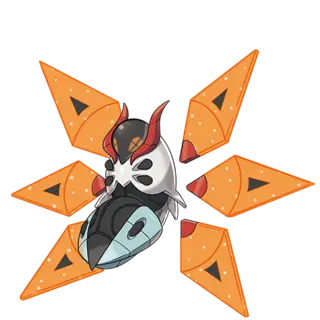
Iron Moth, a Paradox Pokemon, looks like something launched rather than hatched. Its appearance may be based on satellites and space telescopes, particularly the James Webb Space Telescope, and its wings resemble solar panels, heat radiators or LED displays. It may specifically be based on Dyson swarms, the theoretical concept of sending solar panels to closely orbit the sun to send energy back to Earth.
No records exist of this species being caught and data is lacking. It stands 1.2 m tall and weighs 36 kg.
Nine of the 21 Space Pokemon Come From Sun and Moon
Nine of the 21 space Pokemon debuted in Generation VII, the Sun and Moon games, and no other generation supplied more than four. Those games are set in Alola, which is based on Hawaii, and the design notes tie the space theme to the place. The "Mahina-pea" cry Lunala makes in Pokemon Moon may come from the Hawaiian words for moon and bat, and Celesteela is exclusive to Pokemon Moon and Ultra Moon.
Space Pokemon FAQ
How many space Pokemon are there?
21 Pokemon come from space, and nine of them debuted in Generation VII.
What is the strongest space Pokemon?
Solgaleo and Lunala, with a base stat total of 680 each.
Is Solgaleo the sun?
Yes, in a way. Solgaleo is a lion with a sun motif, and it was once known as the Beast That Devours the Sun.
Is Lunala the moon?
Yes, in a way. Lunala is a bat with a Moon motif, and it steals the light from its surroundings and becomes the full moon.