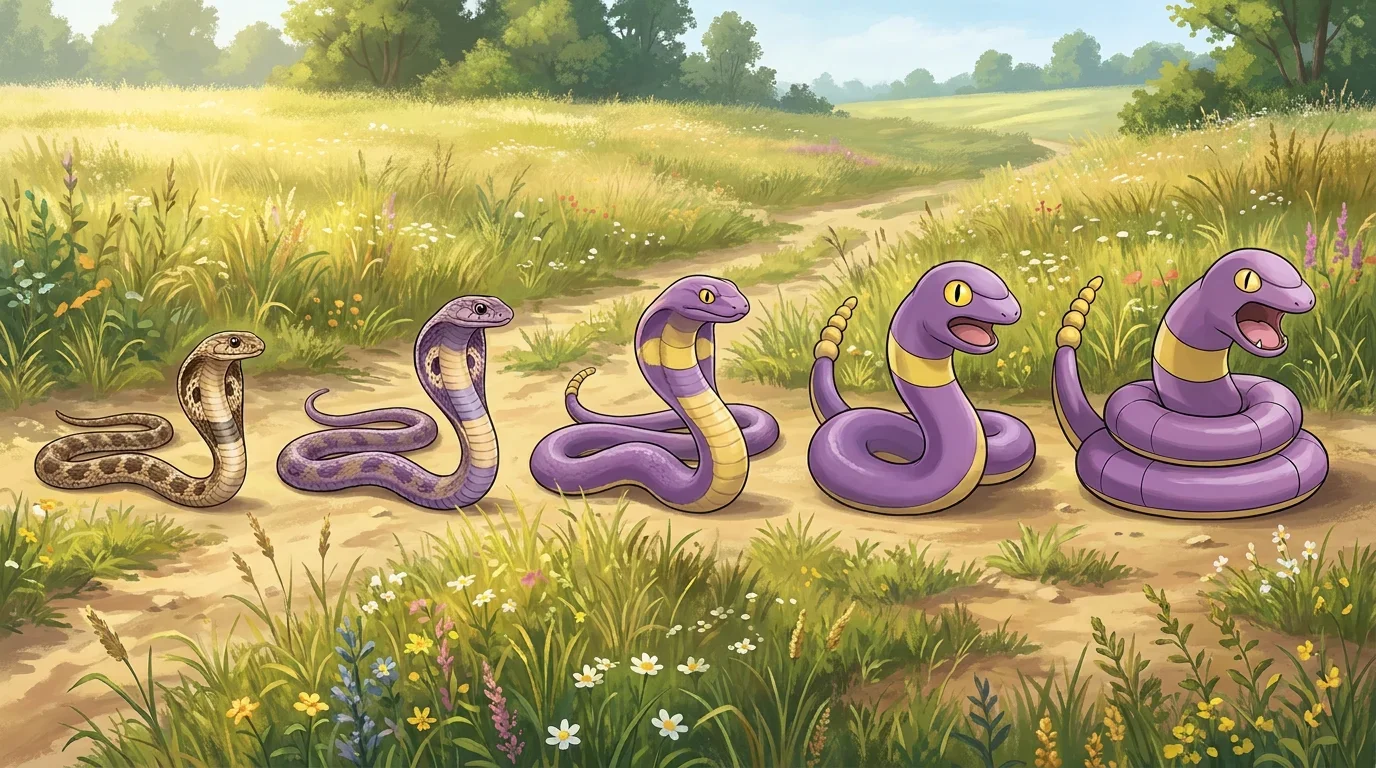
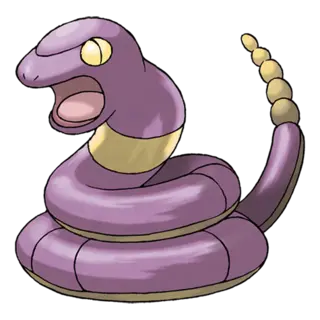
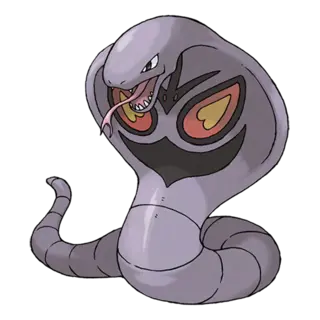
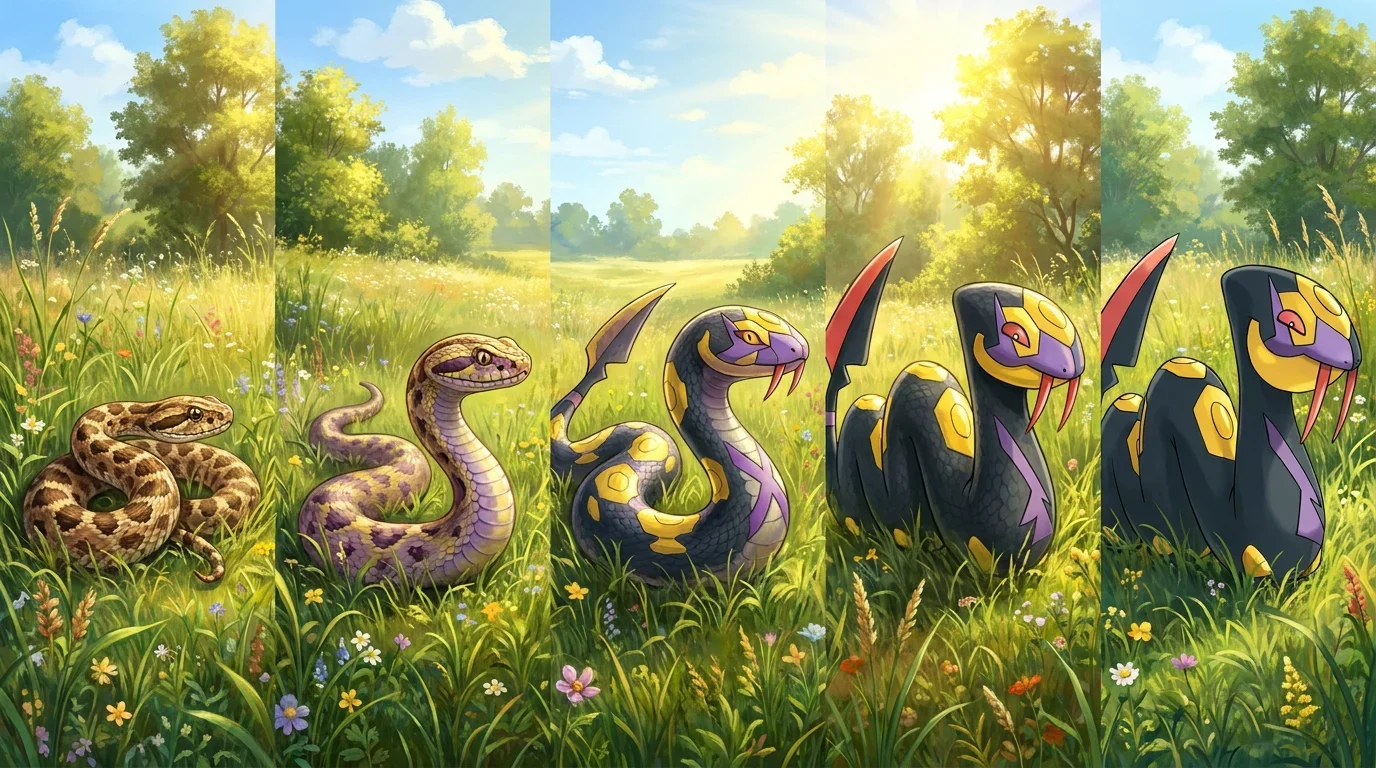
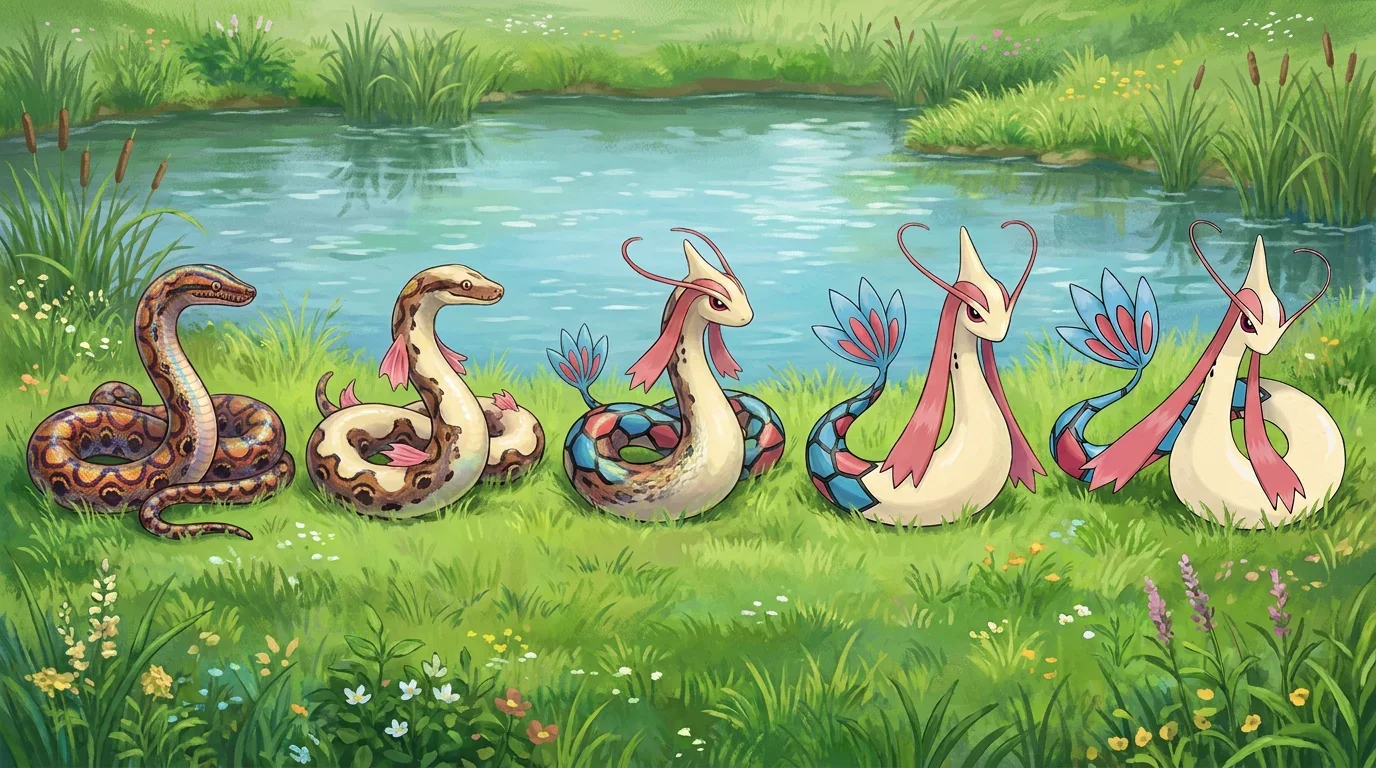
Ekans is the Snake Pokemon, and its design borrows from several real ones. Its venomous bite and tail rattle are similar to a rattlesnake, while its lack of visible teeth and diet of eggs match an egg-eating snake. The single yellow stripe around its neck is reminiscent of the ring-necked snake. It is also in the Dragon Egg Group (egg groups decide which Pokemon can breed together) and can learn Glare, which may be a reference to the legendary basilisk, a serpentine dragon said to kill people with its stare.
The older it gets, the longer it grows, and at night it wraps its long body around tree branches to rest. We sleep worse than that in a bed. Its Intimidate ability lowers the opponent's Attack one stage when it enters battle. An ability is a passive effect that works on its own in battle. It stands 2 m tall and weighs 6.9 kg.
#024
Arbok
#024
Type
Poison
Category
Cobra Pokémon
National Dex
#0024
Debut
Gen I
Base stat total
448
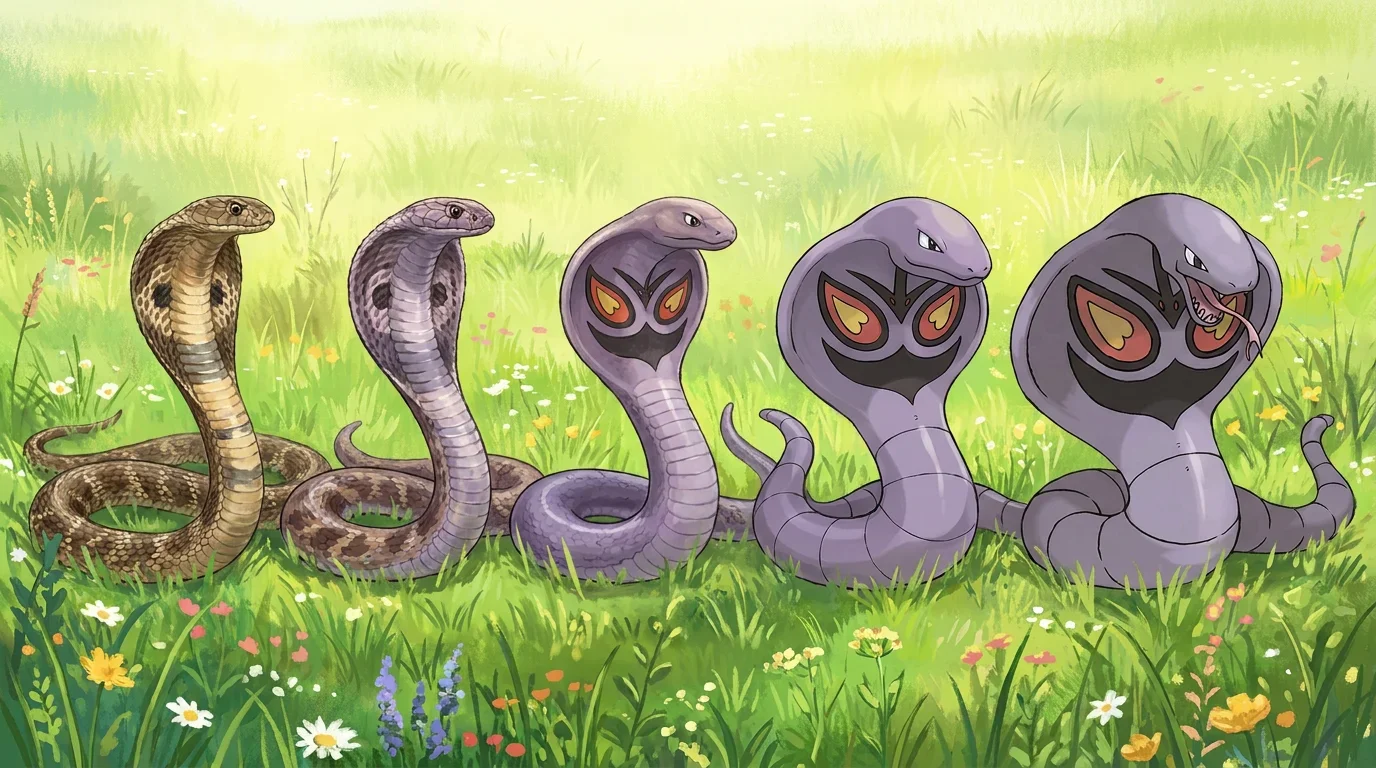
Arbok, the Cobra Pokemon, is based on the Indian cobra because of its venomous bite and hood markings. It may also be based on the king cobra, which is the world's largest venomous snake, though its powerful constriction is closer to boas and pythons. Its frightening face-like belly patterns may be inspired by masks or face paint.
Those patterns have been studied, and six variations have been confirmed. (Someone got paid to study snake bellies, and we would like to apply.) Like Ekans, it can have Intimidate, which leaves the opponent's physical attacks weaker the moment Arbok comes out. It stands 3.5 m tall and weighs 65 kg.
#095
Onix
#095
Type
RockGround
Category
Rock Snake Pokémon
National Dex
#0095
Debut
Gen I
Base stat total
385
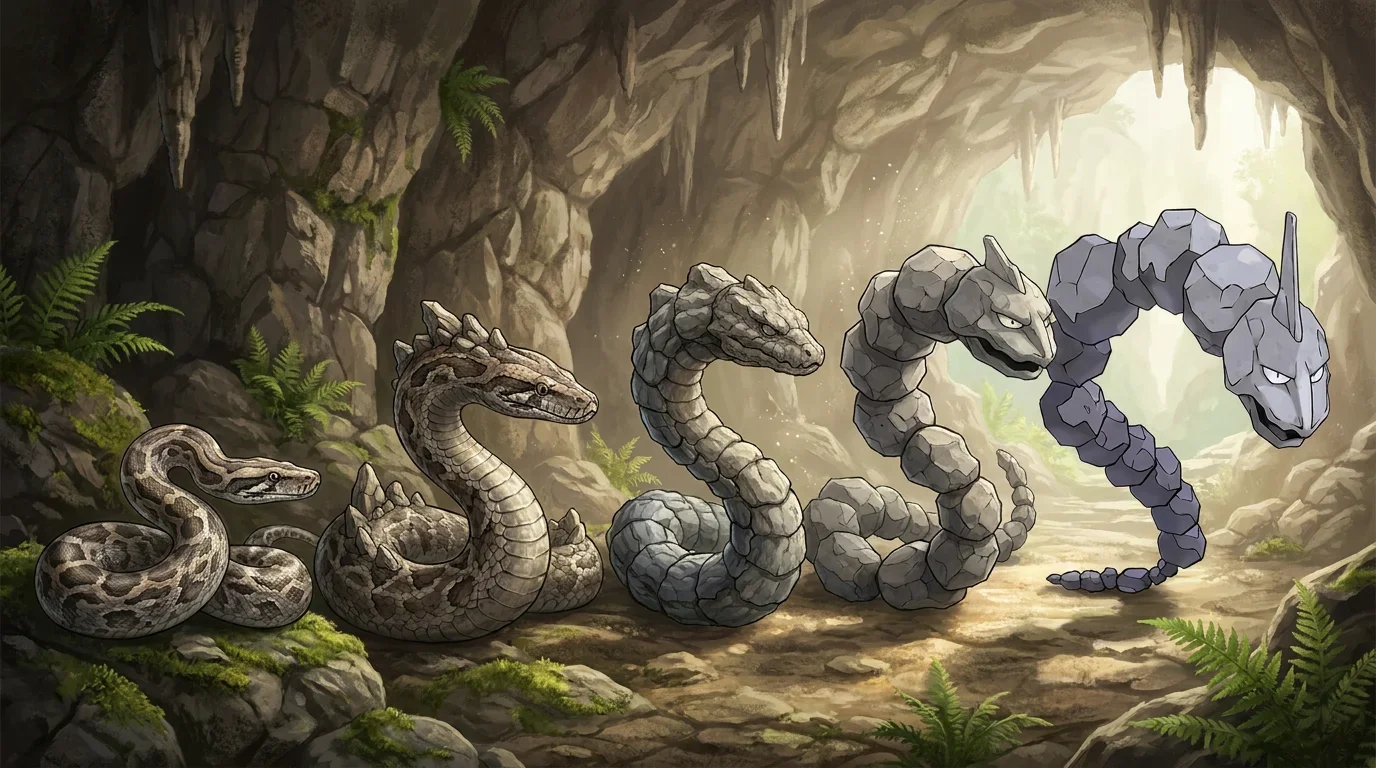
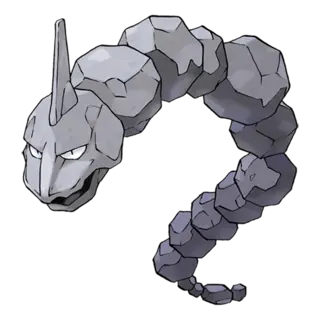
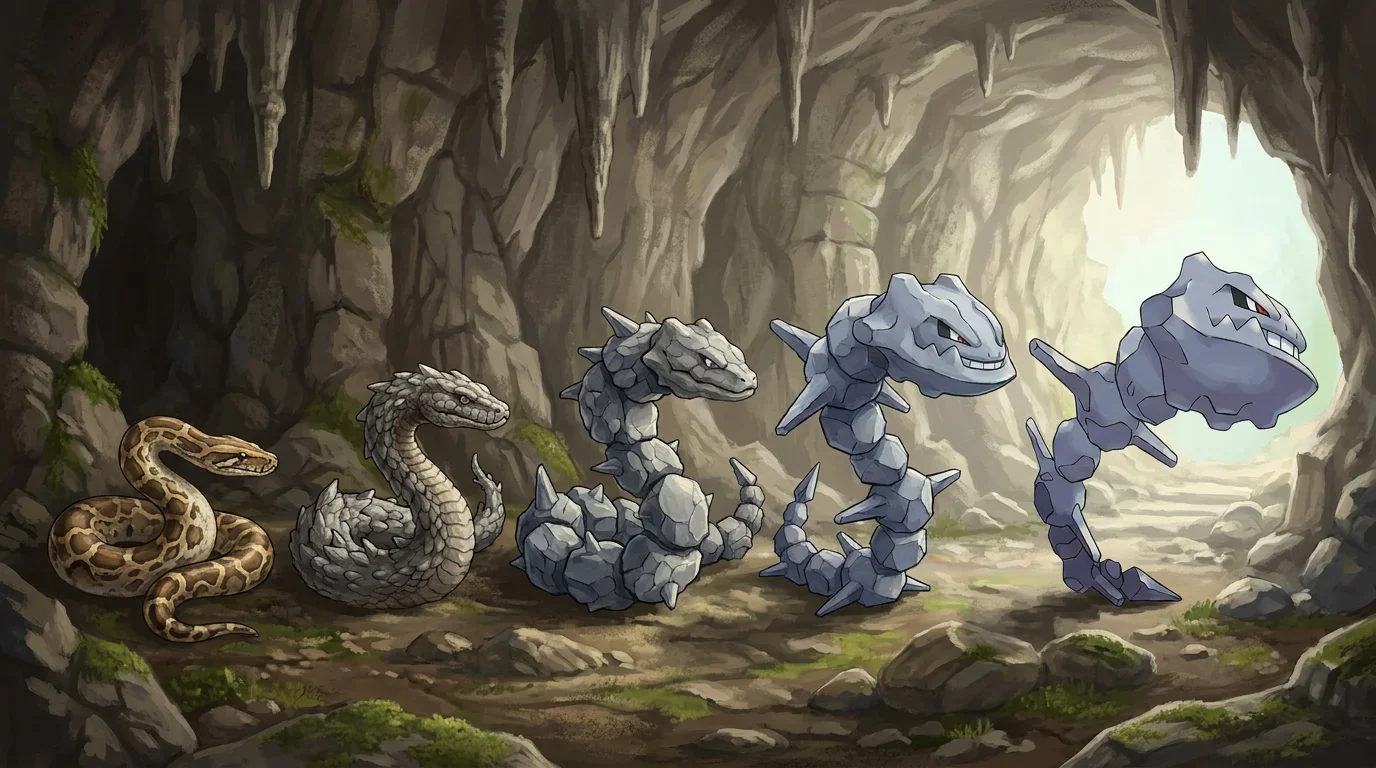
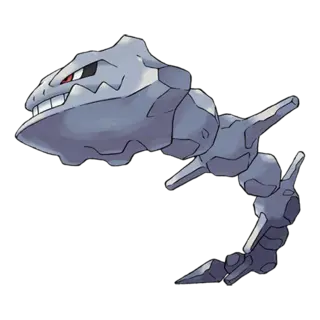
Onix, the Rock Snake Pokemon, may be a visual pun on a rock python or an earthworm. Its great size could have been inspired by the Mongolian death worm, an earthworm-like creature said to reach 2 meters, and its ability to learn Dragon Breath implies some kind of limbless dragon, like the Lindworm. The way it lives, underground and swallowing soil while it tunnels, is much closer to an earthworm than a snake.
It is a chain of immense stones that resembles a giant serpent, feeding on boulders as it burrows deep beneath the ground. Its Defense is 160 and its Attack only 45. Being built out of boulders and still losing fights is something we relate to more than we would like. Its Sturdy ability prevents it from being knocked out from full HP, leaving it at 1 HP instead. It stands 8.8 m tall and weighs 210 kg.
#130
Gyarados
#130
Type
WaterFlying
Category
Atrocious Pokémon
National Dex
#0130
Debut
Gen I
Base stat total
540
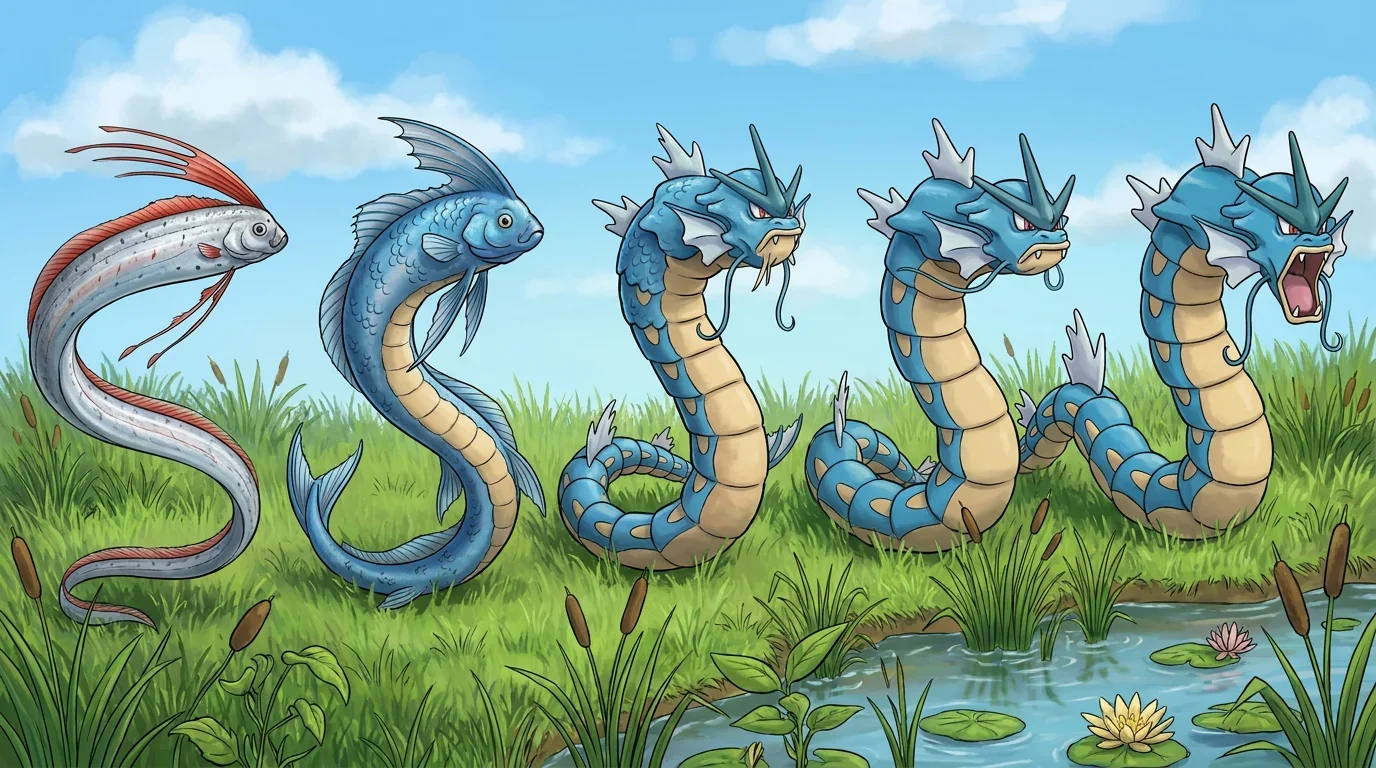
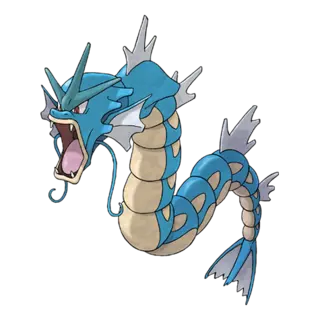
Gyarados, the Atrocious Pokemon, is heavily hinted to be based on the Chinese tale of a carp that swims up a river or waterfall, leaps over the Dragon Gate and becomes a dragon. The legend is an allegory for the drive needed to overcome obstacles. It also is inspired by the sea serpents drawn on medieval and Renaissance navigation maps such as the Carta marina, and one of its early English names was Skulkraken.
It is suspected to be the true identity of a dragon written of in ancient texts, which razed an entire village with white-hot beams from its maw. (Twenty levels of flopping around as a fish would make us angry too.) Its Moxie hidden ability raises its Attack one stage each time it knocks out a Pokemon (a hidden ability is a rarer second ability a species can have). It stands 6.5 m tall and weighs 235 kg.
#147
Dratini
#147
Type
Dragon
Category
Dragon Pokémon
National Dex
#0147
Debut
Gen I
Base stat total
300
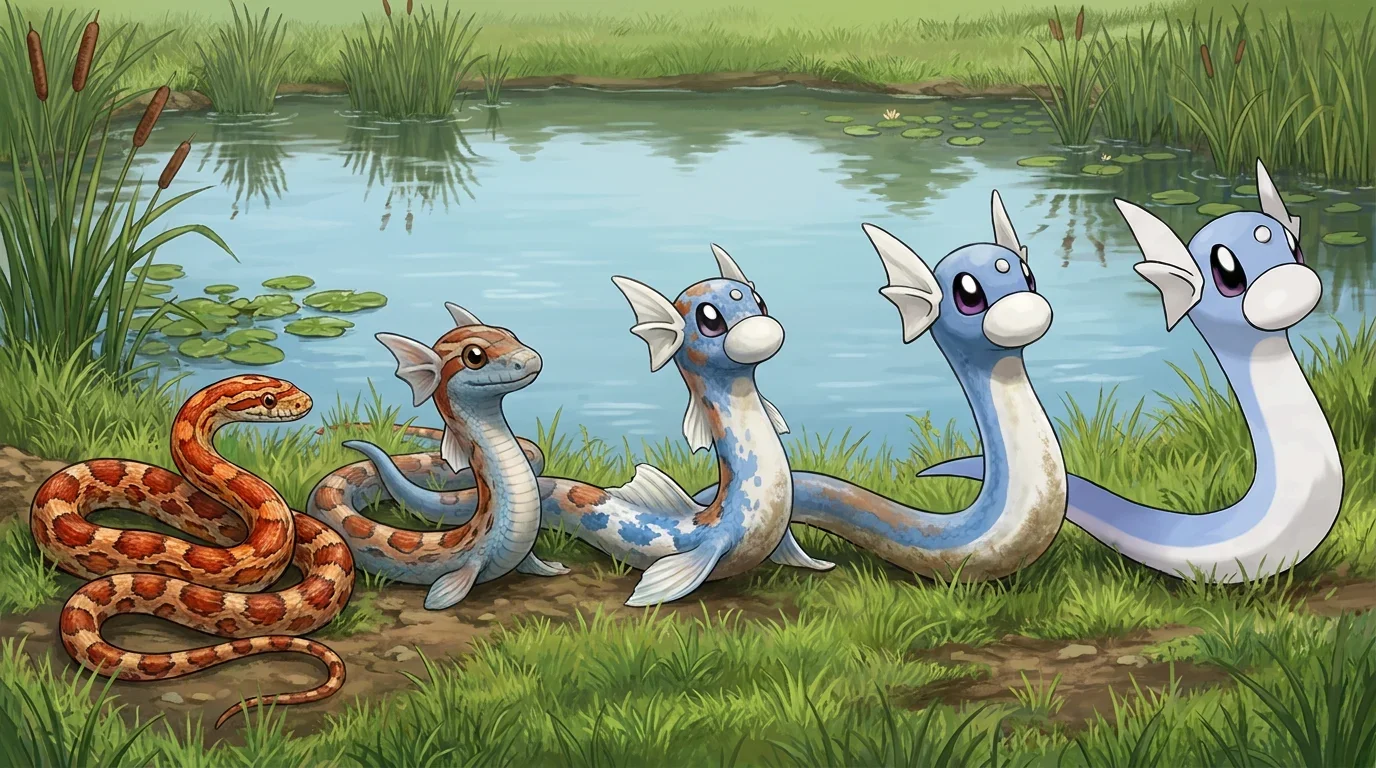
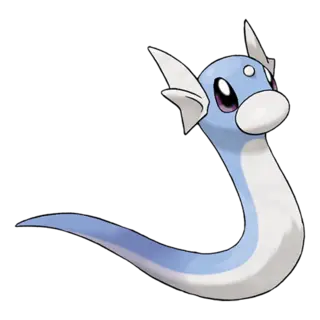
Dratini is based on sea serpents or ryu, traditional Japanese dragons or Chinese dragons who bring good luck. Its constant growth is similar to that of snakes, who grow as long as they live. It may also be based on the Imoogi, a giant serpent from Korean folklore seen as a dragon in training, which must survive for a thousand years before it can become a celestial dragon.
It was long considered to be no more than a myth, and the small lump on its forehead is a horn that is still coming in, much like the wisdom tooth we have been waiting on for years. Its Shed Skin ability gives it a 33% chance of curing any major status problem, such as poison or a burn, after each turn. It stands 1.8 m tall and weighs 3.3 kg.
#148
Dragonair
#148
Type
Dragon
Category
Dragon Pokémon
National Dex
#0148
Debut
Gen I
Base stat total
420
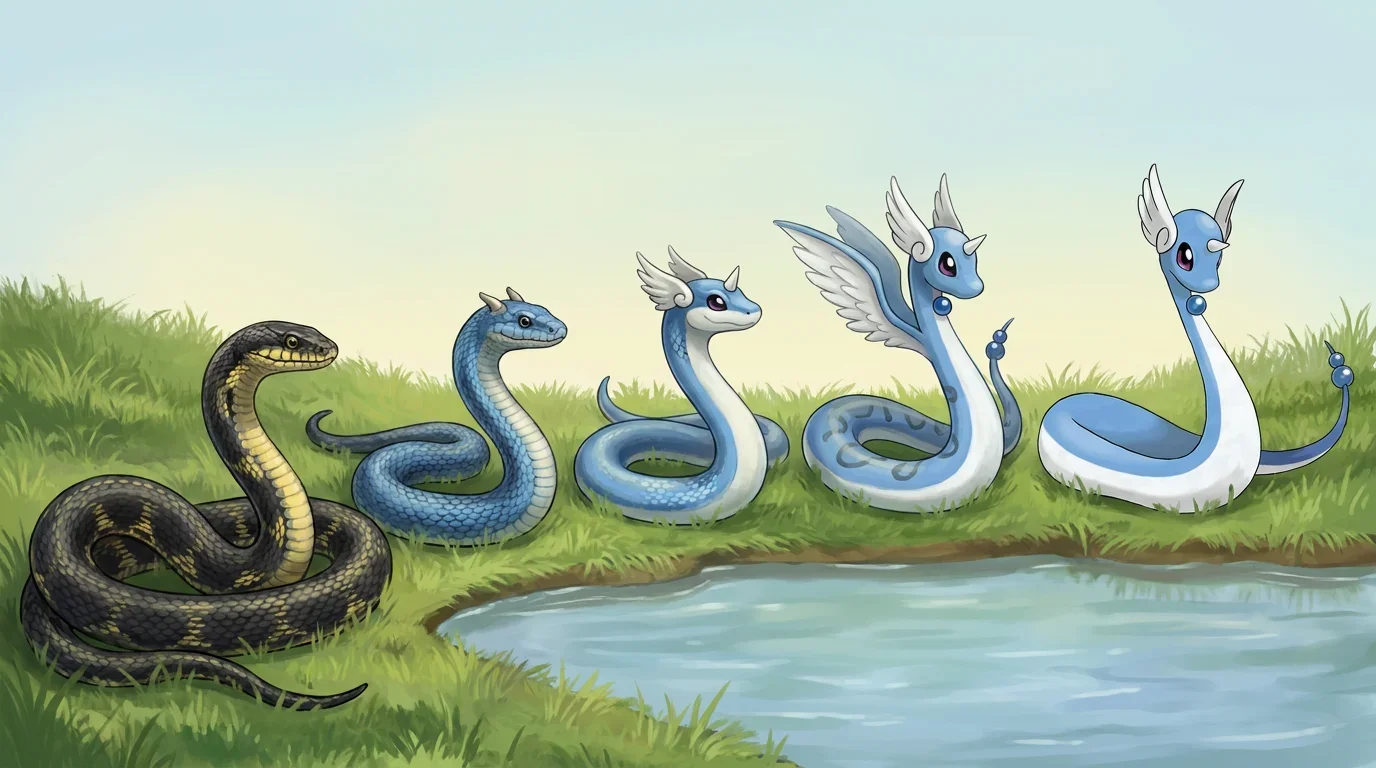
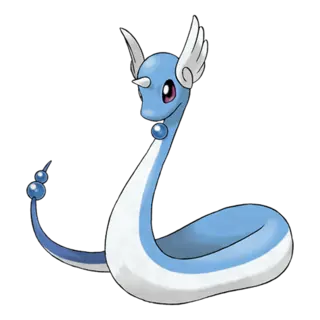
Dragonair shares Dratini's roots in sea serpents and ryu, and it also resembles a snake, its tail even resembling that of a rattlesnake. The wings on its head resemble those on the sandals and hat of the Greek god Hermes, and its long, snakelike body may be a reference to the snakes on his scepter. Like Dratini, it may draw on the imugi, a proto-dragon that becomes a true dragon if it catches a jewel called a Yeouiju falling from the sky. The jewels on its neck and tail might refer to the flaming pearl often placed under a Chinese dragon's chin.
It gathers power in the orbs on its tail and controls the weather. (We cannot even get the thermostat to listen to us.) It stands 4 m tall and weighs 16.5 kg.
#206
Dunsparce
#206
Type
Normal
Category
Land Snake Pokémon
National Dex
#0206
Debut
Gen II
Base stat total
415
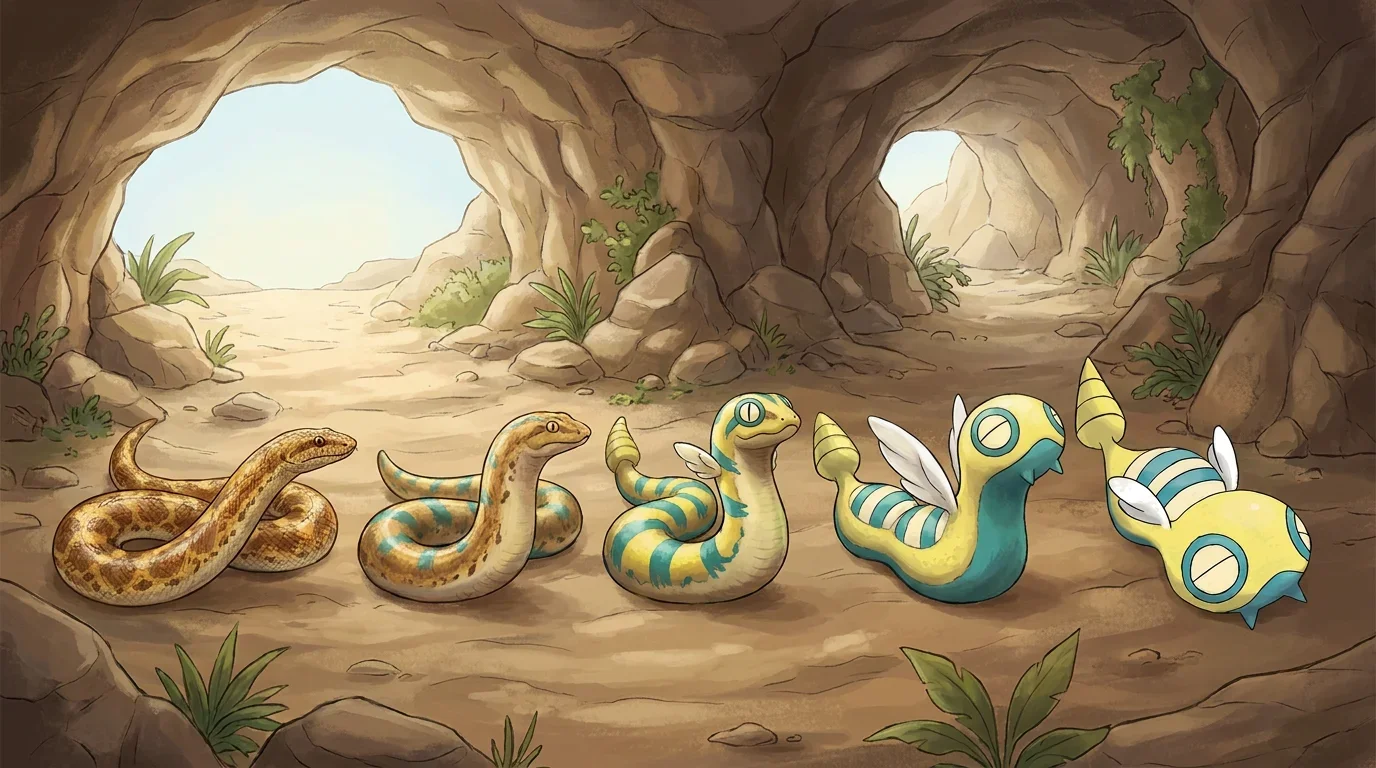
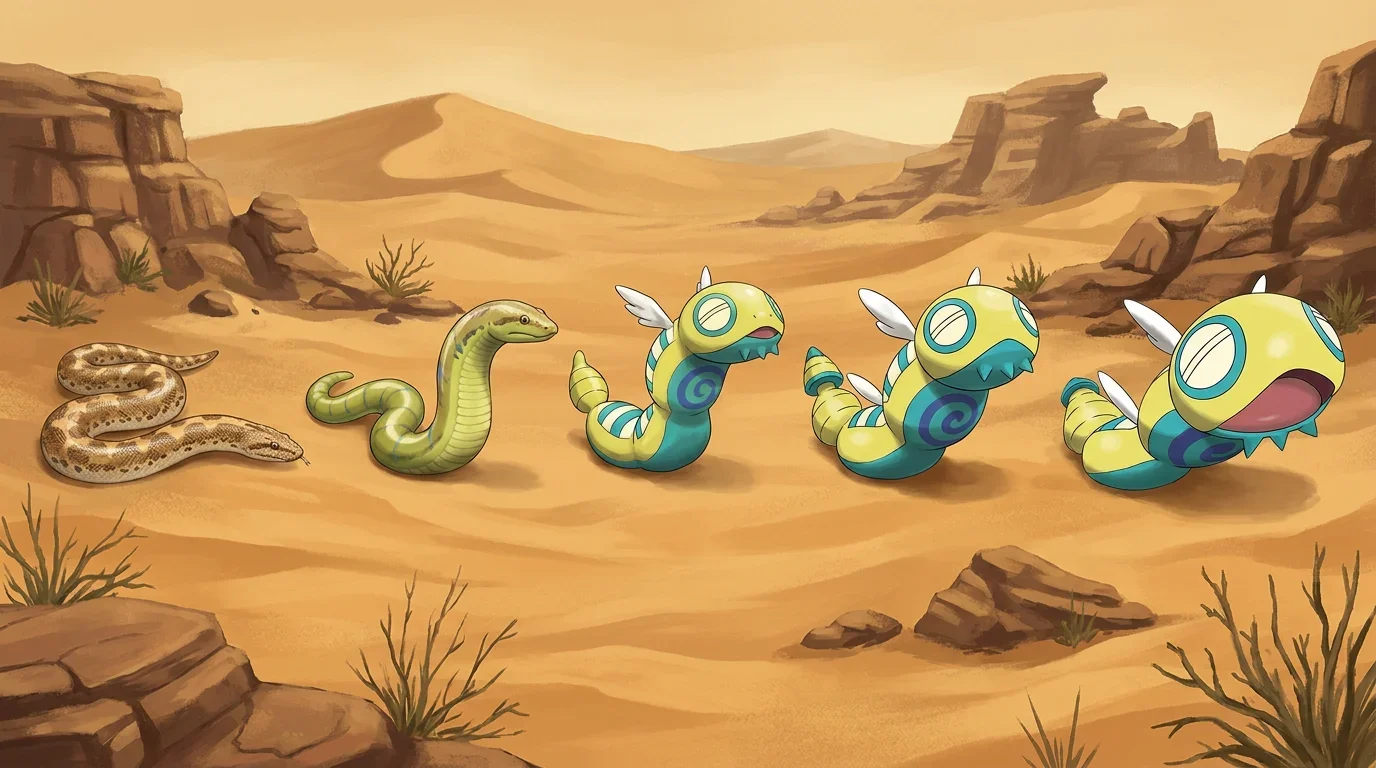
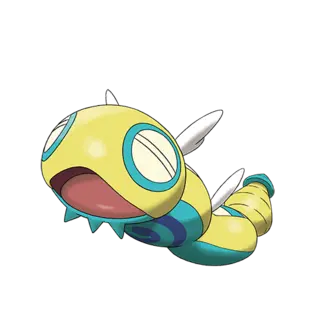
Dunsparce, the Land Snake Pokemon, is based on the snake-like Tsuchinoko cryptid of Japan. Its design may be a pun on another of the cryptid's names, bachi hebi (bee snake), and it combines bee and snake features. Its closed eyes and drill-like tail may come from the vestigial eyes and barbed tail of blind snakes, and its gourd-shaped body may reference gourd-shaped sake bottles, given that the Tsuchinoko is said to have a taste for alcohol.
Its nests are mazes of tunnels, and it never gets lost because it can tell where it is by the scent of the dirt. A cryptid with a taste for sake is the one relative we did not expect to find on this list. Its Serene Grace ability doubles the chance of a move's extra effect happening.
#208
Steelix
#208
Type
SteelGround
Category
Iron Snake Pokémon
National Dex
#0208
Debut
Gen II
Base stat total
510
Steelix, the Iron Snake Pokemon, is the evolved form of Onix. Like Onix, it may be based on a combination of a snake and an earthworm, and it may also come from the bergstutz or stollwurm, a type of dragon presented as burrowing. Its silver coloring and gold Shiny coloring may be references to its debut games, Pokemon Gold and Silver.
Its body is coated with steel powder and is so hard that not even diamond can leave a scratch. (We would also hide in a tunnel if we were worth that much.) Mega Steelix, its Mega Evolution (a stronger battle-only form), has a crystalline body that may refer to graphite turning into diamond under pressure. It stands 9.2 m tall and weighs 400 kg.
#336
Seviper
#336
Type
Poison
Category
Fang Snake Pokémon
National Dex
#0336
Debut
Gen III
Base stat total
458
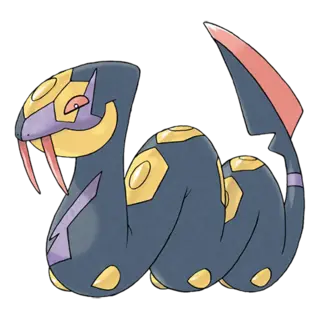
Seviper, the Fang Snake Pokemon, is based on a viper, specifically the habu, a venomous snake. Apart from its scars, the shape of its color pattern resembles that of the elegant pitviper. Its rivalry with Zangoose comes from the real relationship between mongooses and snakes: in Okinawa and Amami, it was common for the habu and the mongoose to be pitted against each other in roadside shows, a practice now considered inhumane.
Its swordlike tail slashes foes and douses them with secreted poison, and it will not give up its long-running blood feud with Zangoose. We hold a grudge against a single printer, which seems small by comparison. It stands 2.7 m tall and weighs 52.5 kg.
#350
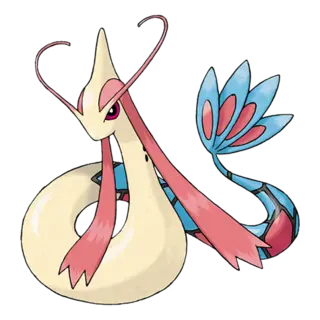
Milotic
#350
Type
Water
Category
Tender Pokémon
National Dex
#0350
Debut
Gen III
Base stat total
540
Milotic, the Tender Pokemon, is based on a sea serpent and a mermaid, with hair-like fins, a pale upper body and a scaly lower body. It is also similar to an oarfish, which has a very long body and red fins. Its tail fin resembles a hand fan, its scales resemble stained glass, and its feminine look may come from Venus, the Roman goddess of love and beauty.
Its change from Feebas may be inspired by The Ugly Duckling, the fairy tale about a small and feeble cygnet that grows up to be a beautiful swan. A glimpse of a Milotic and its beauty will calm any hostile emotions you are feeling. Our inbox would need a lot of glimpses. Its Marvel Scale ability raises its Defense to 1.5× while it has a major status problem.
#495
Snivy
#495
Type
Grass
Category
Grass Snake Pokémon
National Dex
#0495
Debut
Gen V
Base stat total
308
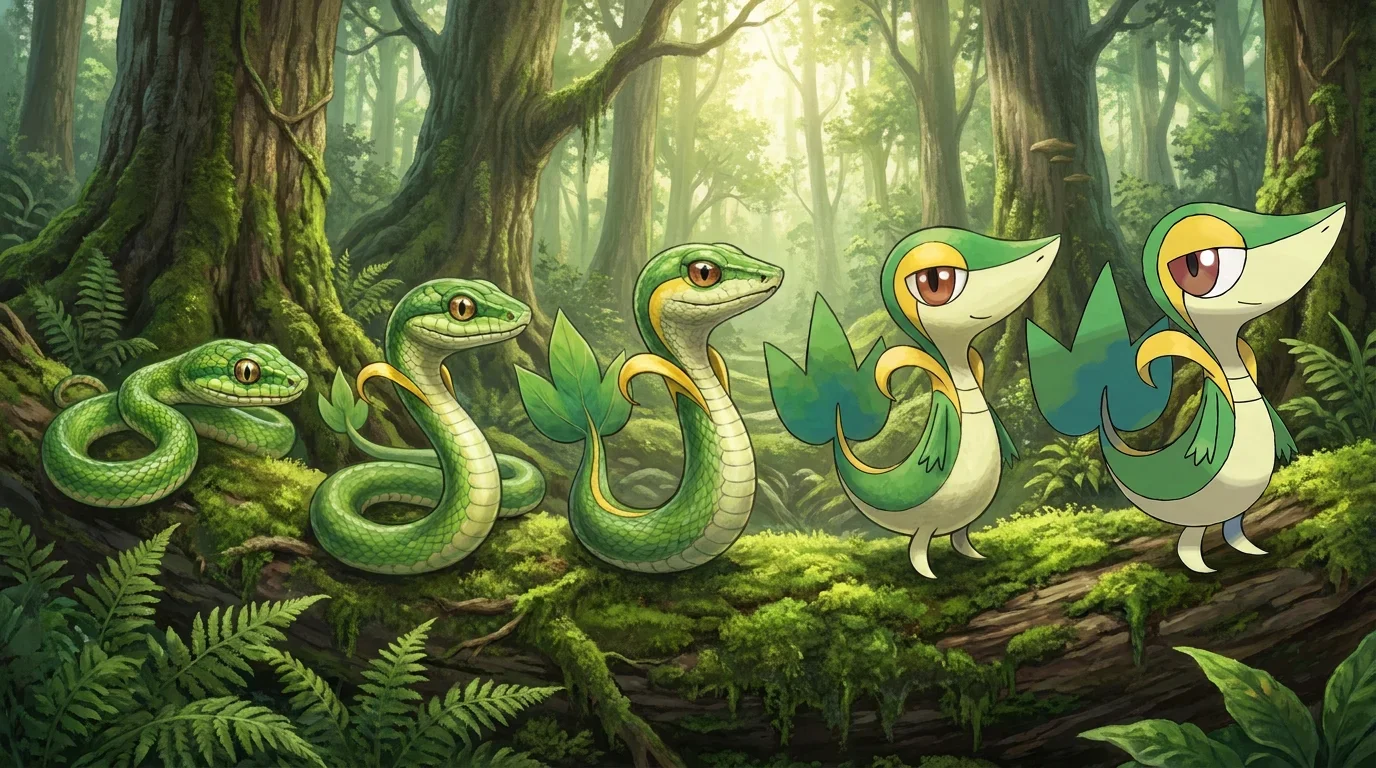
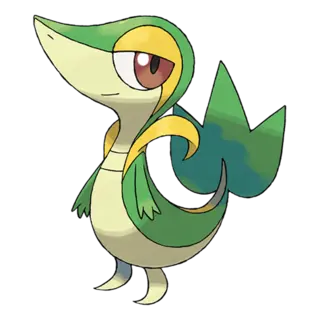
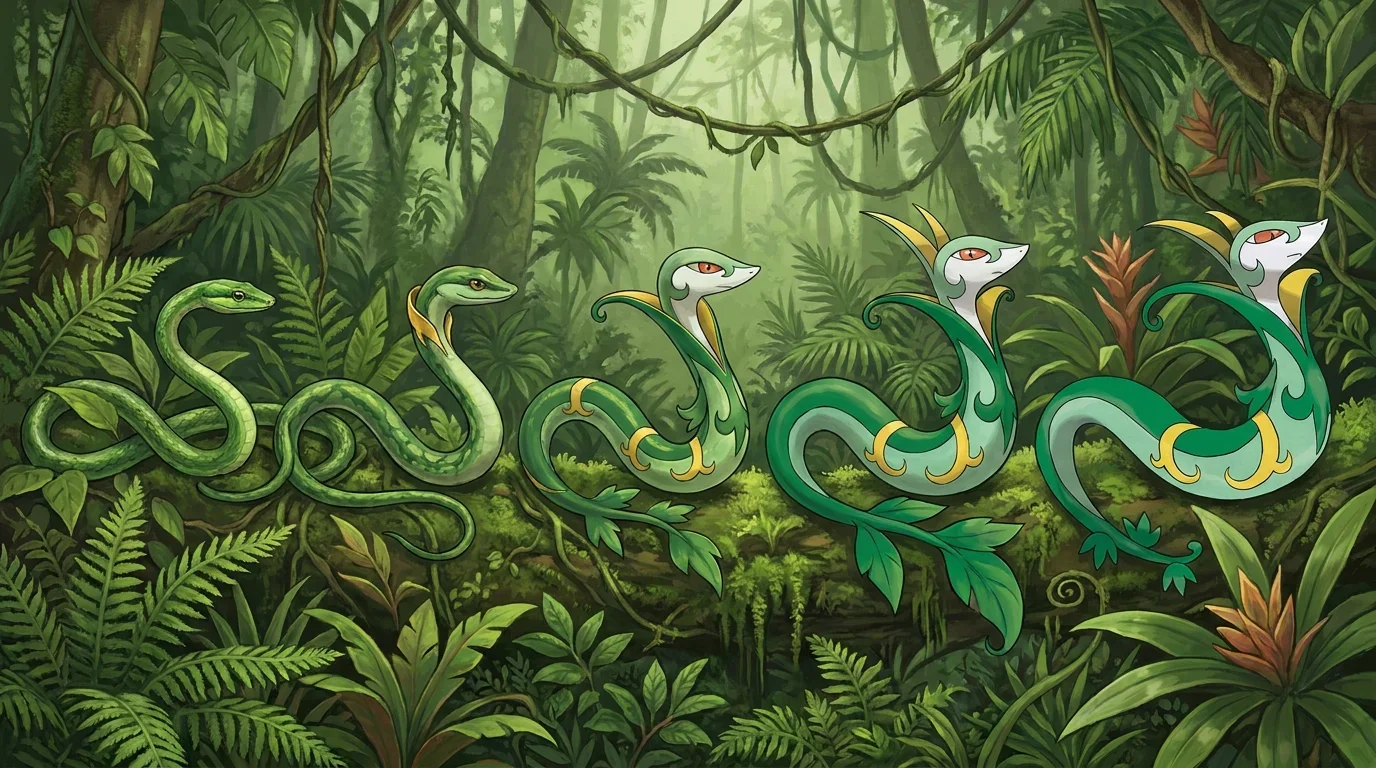
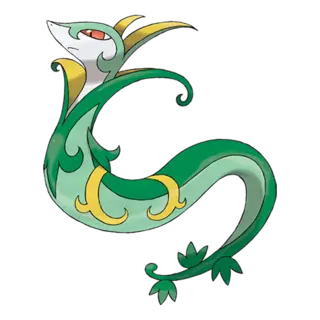
Snivy, the Grass Snake Pokemon, is based on a snake, possibly the vine snake, tree snake or green snake, and some of its features may come from legless lizards. The shape of its head, body and shoulder protrusions may be based on the bird of paradise flower, also called Strelitzia, which is named after Queen Charlotte of Mecklenburg-Strelitz. That gives the whole line its regal theme.
Snivy photosynthesize by bathing their tails in sunlight, and their tails droop when they are not feeling well. Lunch by lying in the sun is a plan we would sign up for today. Its hidden ability, Contrary, inverts stat changes, so a move that would lower its stats raises them instead. It stands 0.6 m tall and weighs 8.1 kg.
#496
Servine
#496
Type
Grass
Category
Grass Snake Pokémon
National Dex
#0496
Debut
Gen V
Base stat total
413
Servine is based on the same vine snakes and tree snakes as Snivy, and some of its features may come from serpentine skinks such as Brachymeles and Chamaesaura. Its head, body and crest may be based on the bird of paradise flower, and its physical features resemble the acanthus leaf motifs popularized during the Renaissance.
It cannot use its leaves for photosynthesis when it gets dirty, so it always keeps itself clean. (If our desk fed us, we would starve.) It stands 0.8 m tall and weighs 16 kg.
#497
Serperior
#497
Type
Grass
Category
Regal Pokémon
National Dex
#0497
Debut
Gen V
Base stat total
528
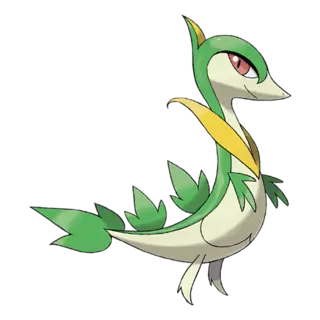
Serperior, the Regal Pokemon, plays the royal theme hardest. Its ability to amplify sunlight may allude to King Louis XIV of France, who called himself the Sun King, and its white face may reference the skin whitening fashion of 17th century European aristocracy. The dark green design on its chest appears to form a fleur-de-lis. Its piercing gaze may be a reference to the basilisk, the legendary king of serpents, and the basil-like leaves on its body may be a pun, since basilisk and basil share the Greek root for king.
It can stop its opponents' movements with a glare alone. We would need years of practice to rule a room by staring at it. The way it keeps its small arms behind its back conveys an air of dominance and authority.
#718
Zygarde
#718
Type
DragonGround
Category
Order Pokémon
National Dex
#0718
Debut
Gen VI
Base stat total
600
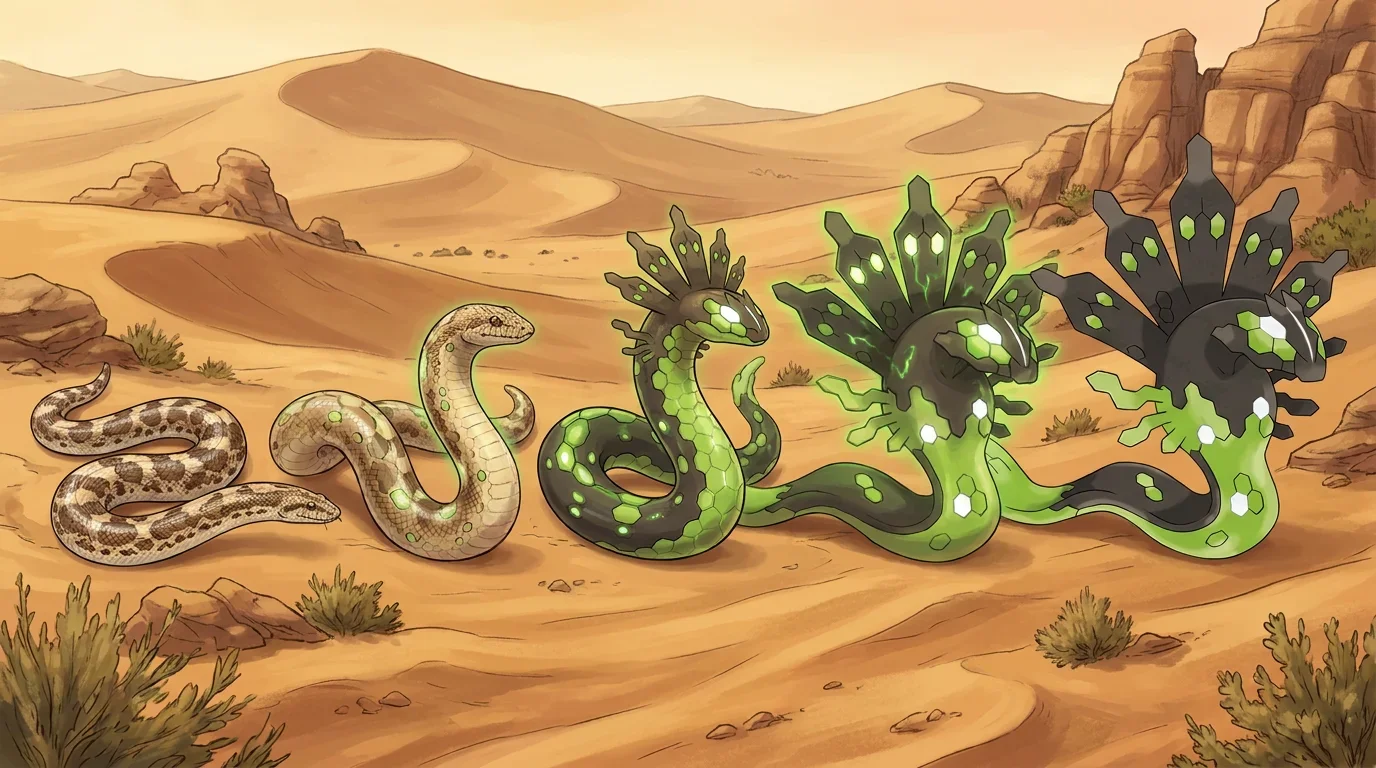
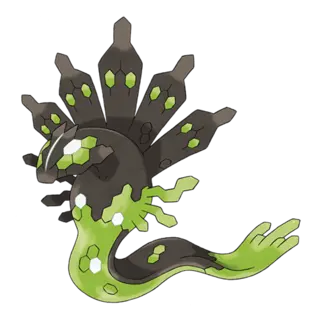
Zygarde, the Order Pokemon, has 10%, 50% and Complete Formes that may be inspired by the three children of Loki in Norse mythology: Fenrir, Jörmungandr and Hel. Its 50% Forme, the snake one, may be based on a serpent in the shape of the letter Z and on Jörmungandr, a sea serpent that encircles the earth. Jörmungandr is said to encircle Midgard, which may allude to Zygarde's Ground type and to the 50% Forme being the middle forme. Its flat shape and wriggling movement may also come from the tsuchinoko.
Some believe it can change to an even more powerful form when battling those who threaten the ecosystem. We admire the commitment of a Pokemon named after a letter and shaped like it.
#843
Silicobra
#843
Type
Ground
Category
Sand Snake Pokémon
National Dex
#0843
Debut
Gen VIII
Base stat total
315
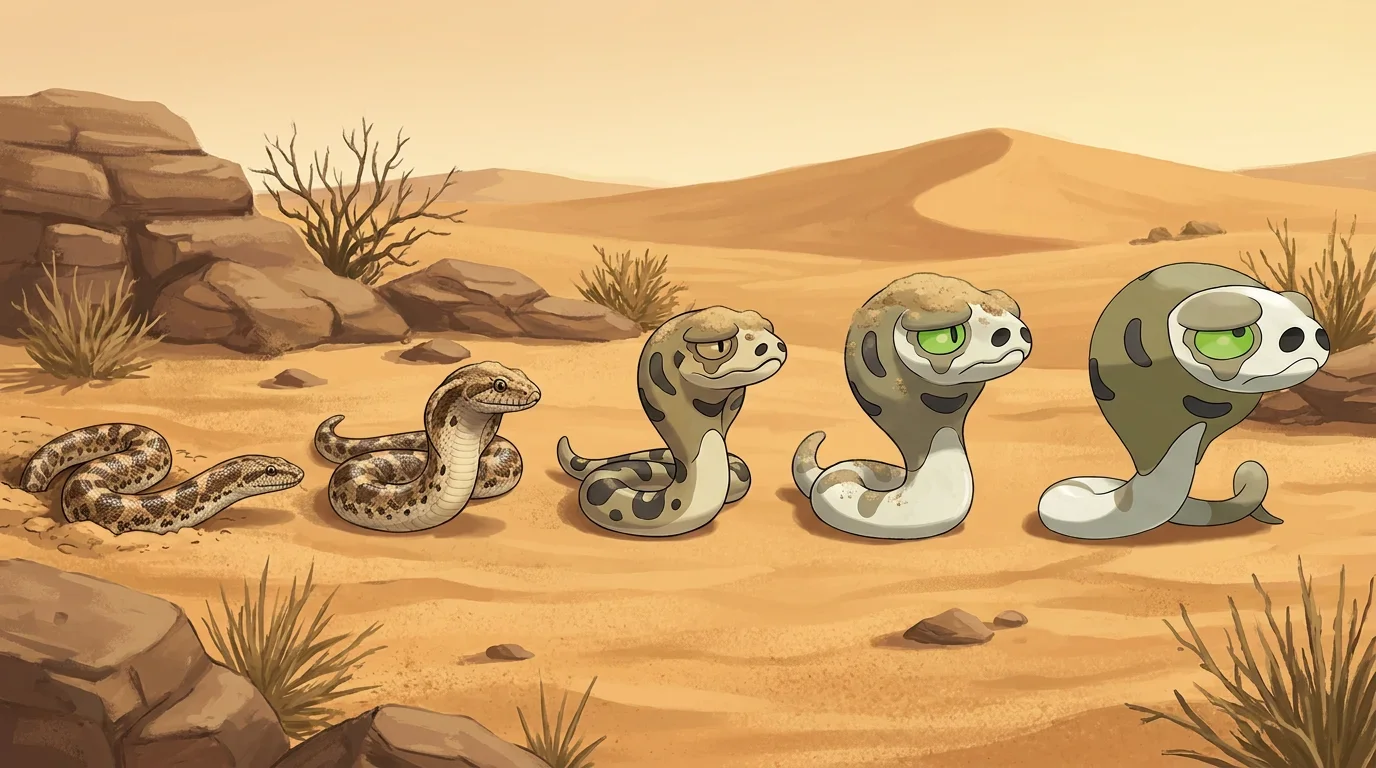
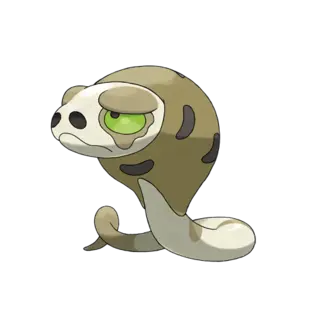
Silicobra, the Sand Snake Pokemon, has a sand pouch around its neck that is similar to the hood of a cobra. It may be specifically based on the false cobra, a species from the deserts of North Africa and the Middle East that can flare its neck into a hood when threatened. Its habit of shooting sand from its nostrils may come from spitting cobras, which spit venom out of their fangs in much the same way.
It spews sand from its nostrils, and while the enemy is blinded, it burrows into the ground to hide. (We have handled meetings with less grace.) Its Sand Spit ability creates a sandstorm when it is hit by an attack. It stands 2.2 m tall and weighs 7.6 kg.
#844
Sandaconda
#844
Type
Ground
Category
Sand Snake Pokémon
National Dex
#0844
Debut
Gen VIII
Base stat total
510
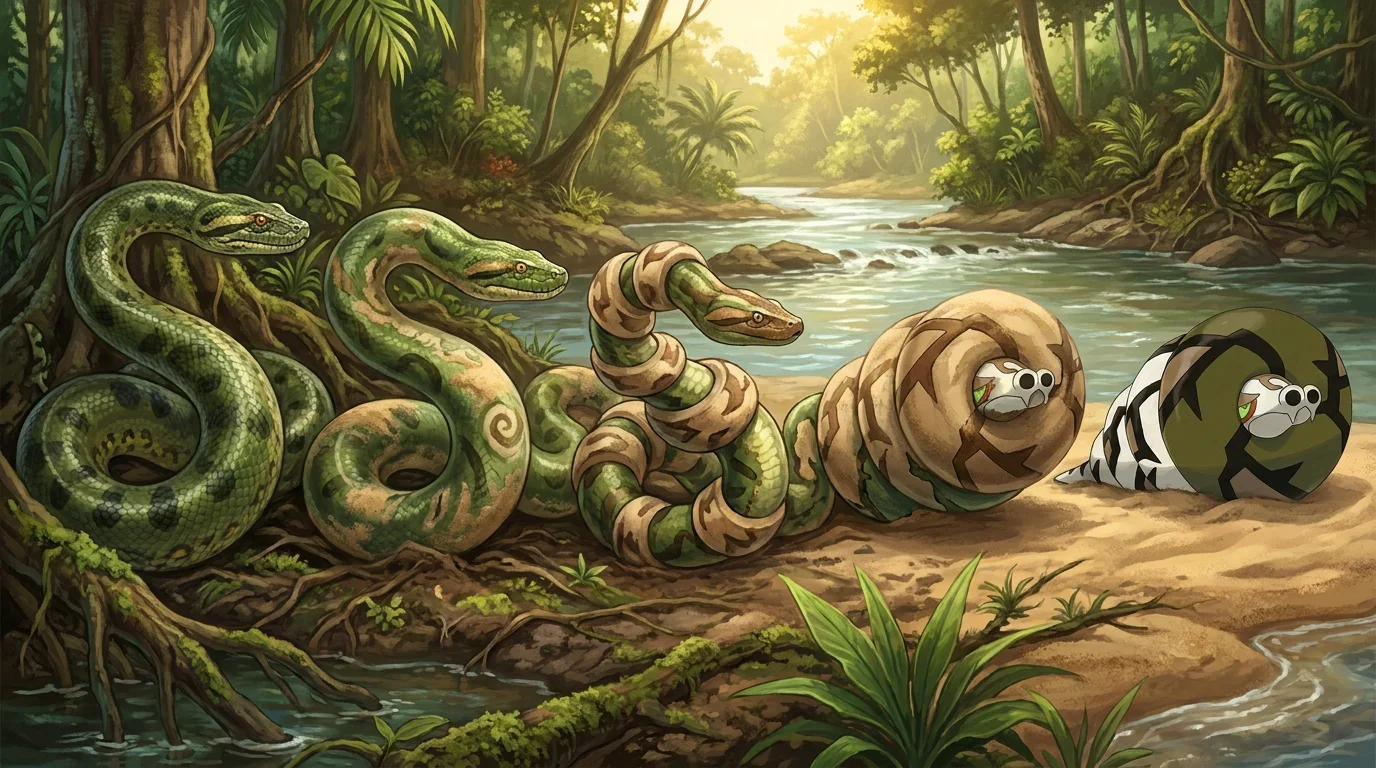
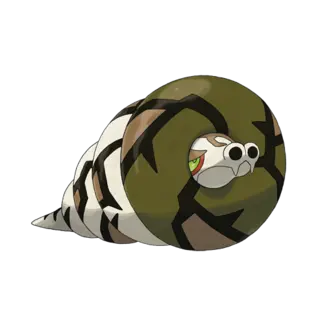
Sandaconda is based on an anaconda, though it may also be based on desert snakes such as the sidewinder, which uses coiling and rippling motions to cross sandy dunes. Because it blasts sand out of its nose, it may also be based on a double-barreled gun. It may also take after the ball python, named for its habit of curling into a ball to hide its head.
Its unique style of coiling lets it blast sand out of its sand sac more efficiently. Its Gigantamax form, a giant version it can take in some battles in the Galar region, may be based on a dust devil.
#982
Dudunsparce
#982
Type
Normal
Category
Land Snake Pokémon
National Dex
#0982
Debut
Gen IX
Base stat total
520
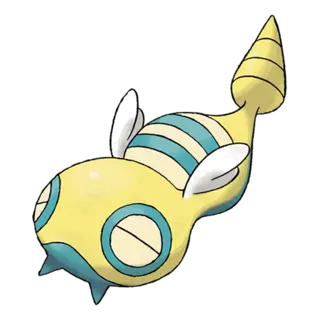
Dudunsparce is the evolved form of Dunsparce. Like Dunsparce, it is based on the Tsuchinoko, and its habit of sucking in and expelling blasts of air may reference the puff adder, a snake that inflates and expels air as a loud hiss. Its extra body segment is similar to the ultrabithorax mutation seen in the fruit fly, which grows a second thorax directly behind the first.
It drives enemies out of its nest by filling its long, narrow lungs with air and then releasing it in an intense blast. Dunsparce waited from the second generation to the ninth for this evolution, and we have taken longer to do less.
#1019
Hydrapple
#1019
Type
GrassDragon
Category
Apple Hydra Pokémon
National Dex
#1019
Debut
Gen IX
Base stat total
540
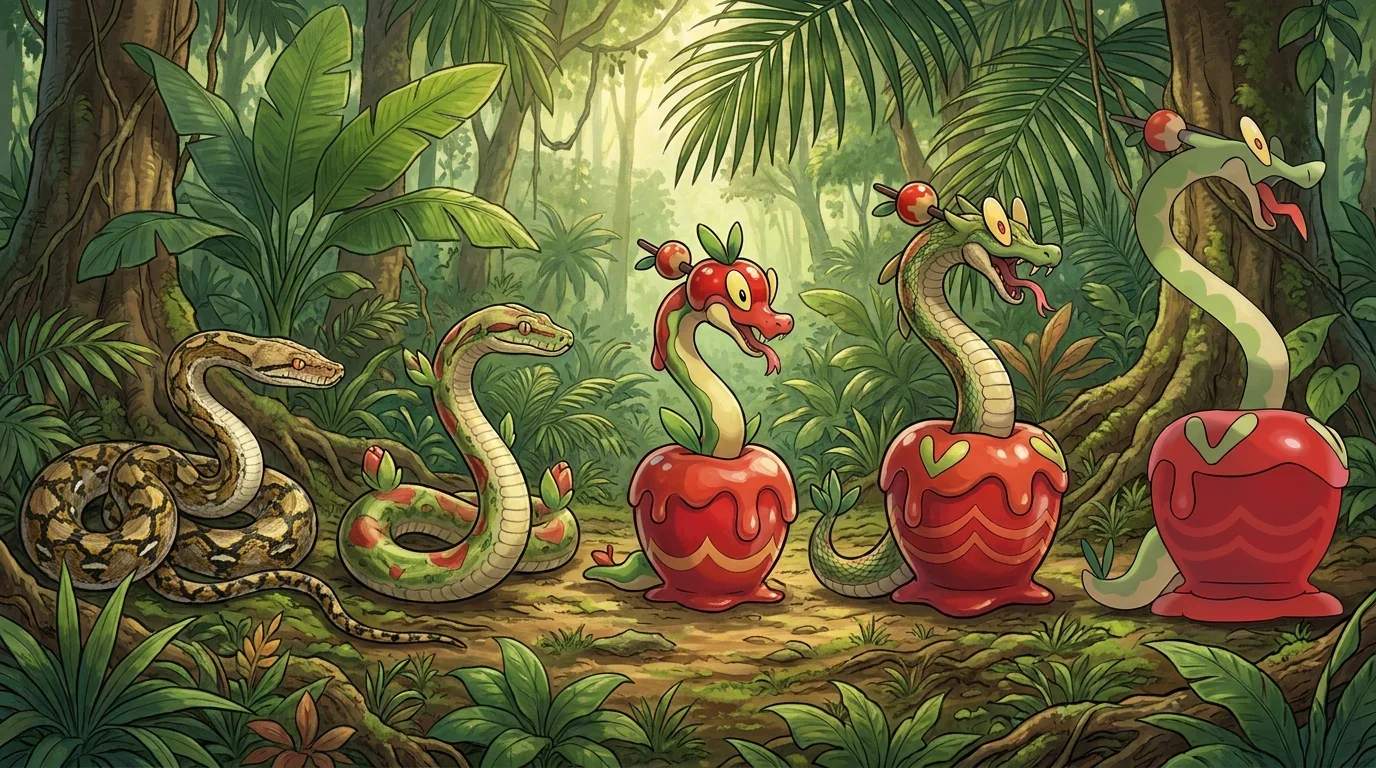
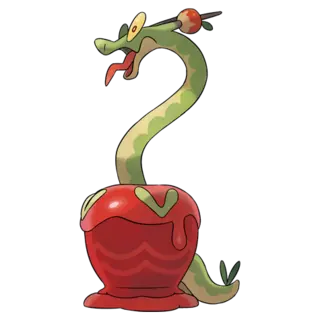
Hydrapple, the Apple Hydra Pokemon, is inspired by multiheaded serpents such as the Yamata no Orochi, an eight-headed dragon or serpent from Japanese mythology, the Lernaean Hydra from Greek mythology, and Ladon, the many-headed dragon that guarded the golden apples in the Garden of the Hesperides. It also plays on the old image of a worm burrowing into an apple, and on the wyrm, a type of dragon.
These capricious syrpents have banded together, and their true power is unleashed on the rare occasion their moods align. Its signature move, Fickle Beam, is doubled in power when the seven syrpents align at random. Seven heads that rarely agree make a group chat we have been in. Its Regenerator ability heals a third of its max HP when it switches out.
Ten of the 18 Snake Pokemon Are in the Dragon Egg Group
Ten of the 18 snake Pokemon are in the Dragon Egg Group. In the breeding rules, Ekans, Seviper and even Milotic count as kin to dragons. Only four have the Dragon type: Dratini, Dragonair, Zygarde and Hydrapple. The legends behind the rest close the gap. Gyarados comes from a carp that becomes a dragon at the Dragon Gate, Onix and Steelix from the Lindworm and the stollwurm, and Zygarde from the world serpent of Norse myth.
Dratini spells the idea out. It may be based on the Imoogi, a giant serpent seen as a dragon in training, which observes the sky and waits for a falling jewel that lets it become a celestial dragon.
Snake Pokemon FAQ
How many snake Pokemon are there?
There are 18 snake Pokemon. Eleven of them have a snake word in their category, and Gyarados, Dratini, Dragonair, Milotic, Serperior, Zygarde and Hydrapple were designed from snakes, sea serpents and dragons.
What is the strongest snake Pokemon?
Zygarde, with a base stat total of 600. Among the snake Pokemon that are not legendary, Gyarados, Milotic and Hydrapple tie at 540.
What is the biggest snake Pokemon?
Steelix. It measures 9.2 m and weighs 400 kg, ahead of Onix at 8.8 m.
Is Gyarados a snake?
No. Gyarados is the Atrocious Pokemon, based on a carp that becomes a dragon and on the sea serpents of old maps, though its long body puts it on this list.
Is Dunsparce a snake?
Yes. Its category is the Land Snake Pokemon, and it is based on the Tsuchinoko, a snake-like cryptid from Japan.