Moth Pokemon rarely stop at the insect itself. Most of them start from a real moth and then pick up a myth or an old saying. Moths are known for being drawn to lights at night, and a few of these designs reuse the idea.
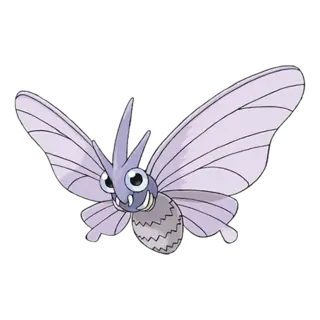
Venomoth is based on swallowtail moths, many of which are toxic, and it is a Poison type, the element that decides what it hits hard and what hurts it. Its face and its insect diet suggest a second source, lacewings, which like many moths are attracted to lights at night, and it may be a play on the moth lacewing in particular. The powdery scales on its wings are hard to remove from skin, and they leak poison on contact. That defensive streak carries into battle through Wonder Skin, one of its abilities and the hidden one, meaning a rarer alternative to the usual abilities, which are passive effects that work on their own. Wonder Skin lowers the accuracy, or hit chance, of non-damaging moves aimed at Venomoth to exactly 50%, so a sleep move becomes a coin toss. Its Shiny form, a rare alternate coloring, looks like a blue morpho butterfly.
#267
Beautifly
#267
Type
BugFlying
Category
Butterfly Pokémon
National Dex
#0267
Debut
Gen III
Base stat total
395
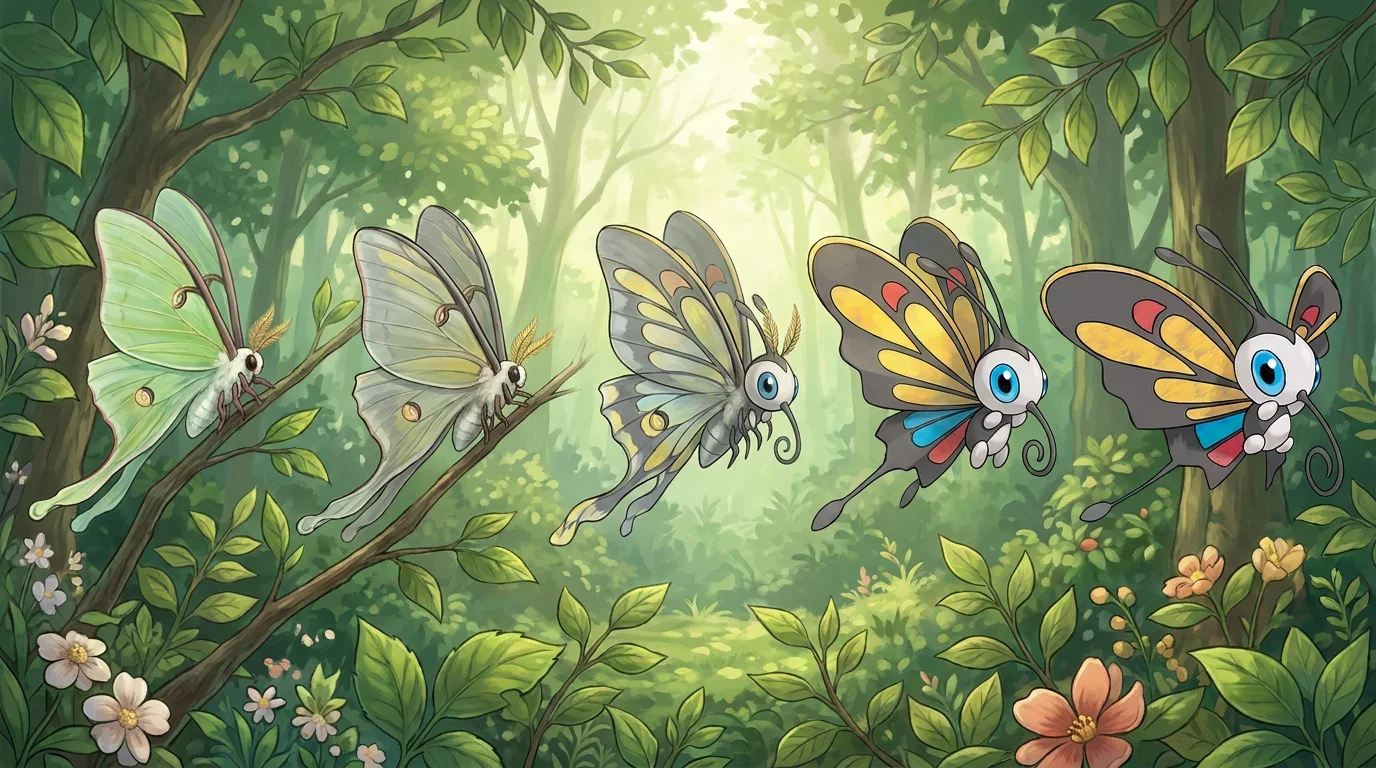
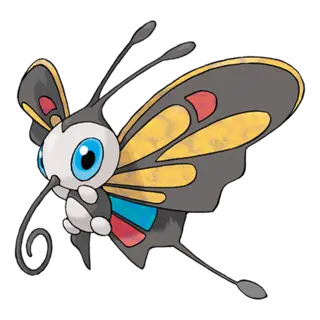
Beautifly is the one butterfly in the group. It is based on a swallowtail butterfly, particularly the common yellow swallowtail, going by the shape and colors of its wings, and that orange-yellow and black also brings the monarch butterfly to mind. However, it pierces prey with its proboscis, the long feeding tube, the way a vampire moth or a mosquito does. It's greedy too, and to keep its favorite food to itself it chases away Combee as they try to gather nectar. (We have seen people guard a buffet tray with far less commitment.) In battle its highest stat is Special Attack at 100, the stat that powers special moves, which are the energy-based attacks.
#269
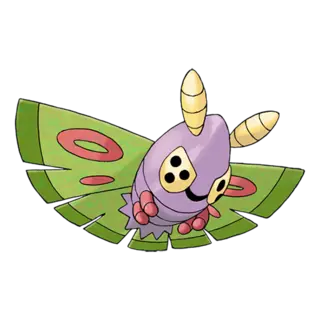
Dustox
#269
Type
BugPoison
Category
Poison Moth Pokémon
National Dex
#0269
Debut
Gen III
Base stat total
385
Dustox is based on the Japanese luna moth, also called the Japanese moon moth, because of its green wings and its nocturnal habits. It can also learn Moonlight, a healing move, which ties it to the moon in more than looks. Its Poison type may come from butterflies and moths that keep toxic chemicals in their bodies from the plants they ate as larvae. That poison becomes a problem around people, since Dustox tends to be drawn to bonfires on dark nights and is hard to chase away from settlements because it scatters highly toxic scales. It treats a bonfire as an open invitation, which is more commitment than we give an RSVP. Shield Dust, one of its abilities, protects it from the extra effects of incoming moves. Its Shiny colors resemble the Japanese silk moth.
#414
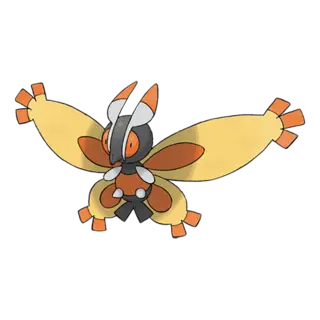
Mothim
#414
Type
BugFlying
Category
Moth Pokémon
National Dex
#0414
Debut
Gen IV
Base stat total
424
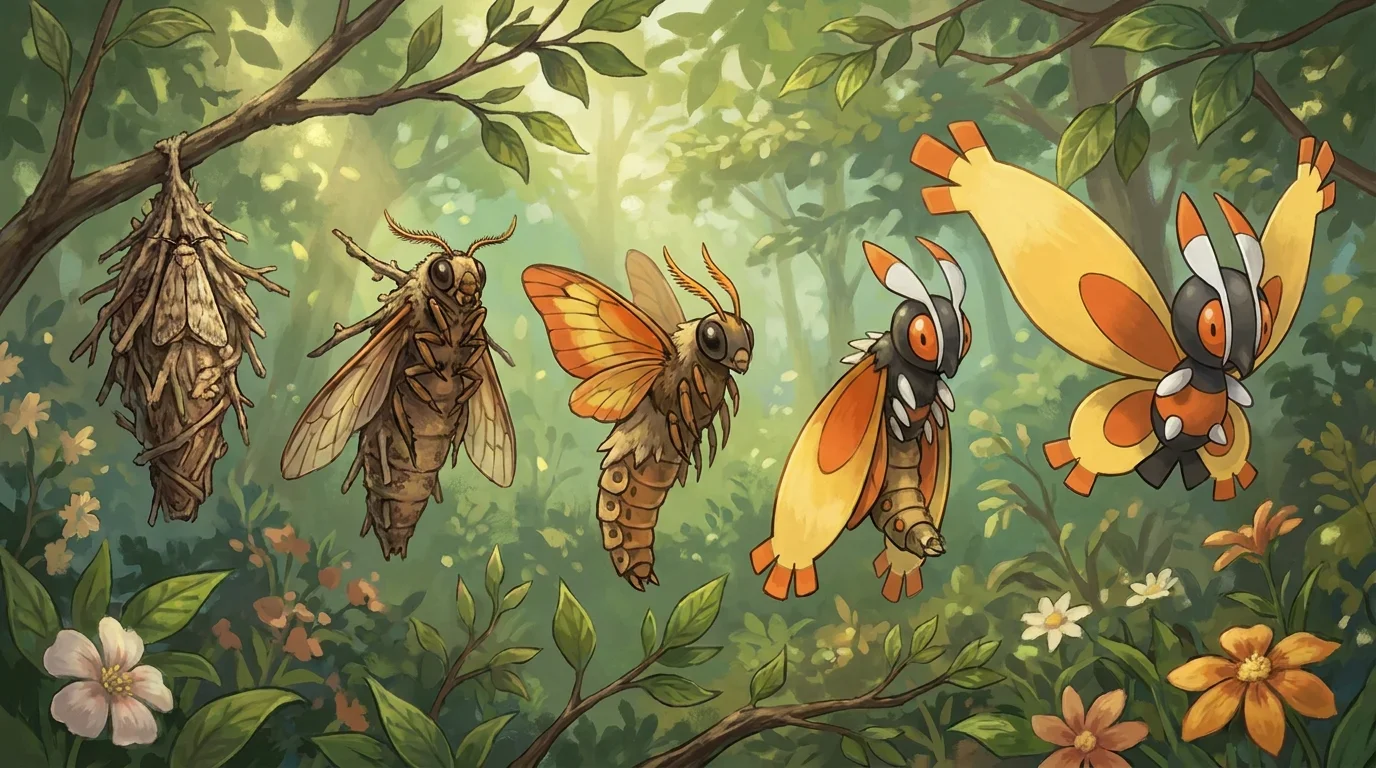
Mothim, the Moth Pokemon, is based on a fully mature male bag moth. Its female counterpart is based on female bag moths, which never fully mature and spend their whole lives wingless in cocoons. Its honey-thieving behavior looks like it comes from the lesser death's head hawkmoth, commonly known as the "bee robber". The legend in the mix is the Slavic cikavac, a bird familiar with a pouch and a penchant for stealing milk and honey. Mothim scatters steel-colored scales as it flaps its wings, and even though it feeds mainly on flower nectar, it is not often seen around flower gardens. Its Attack and Special Attack are both 94, and Attack is the stat that powers contact moves.
#636
Larvesta
#636
Type
BugFire
Category
Torch Pokémon
National Dex
#0636
Debut
Gen V
Base stat total
360
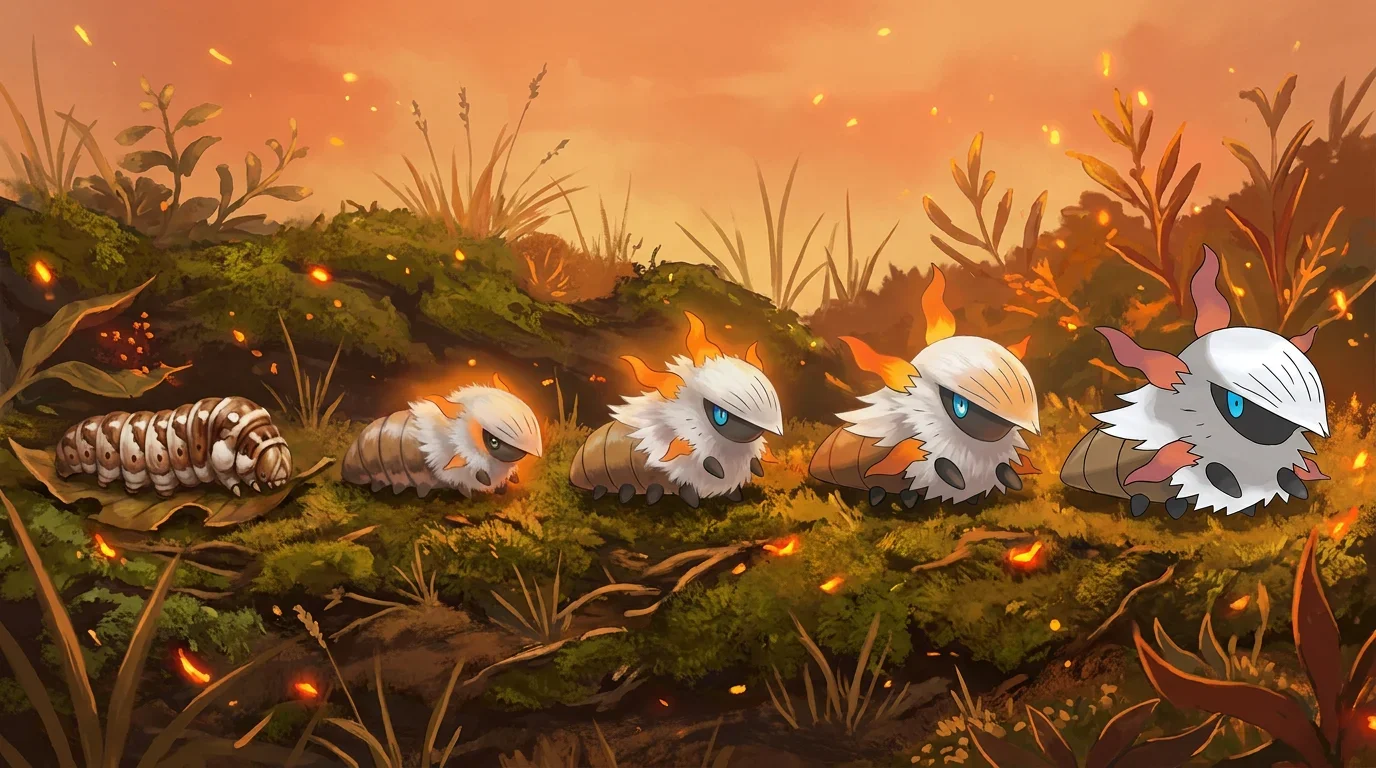
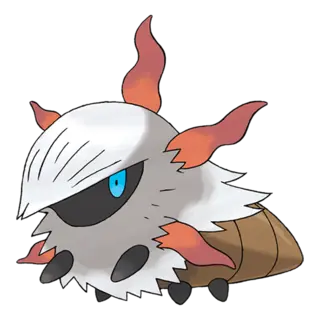
Larvesta, the Torch Pokemon, is based on a moth larva, and it bears some resemblance to the Valais Blacknose sheep. Its design may be a visual pun on "woolly worm", another name for a tiger moth larva. Its horns could reference a halo or sun rays, while the red growths around its body reference the Tower of the Sun, a famed Japanese monument. That sun theme runs right into its lore of being born from the sun, which may allude to Phaethon, son of the Greek sun god, who fell from his father's solar chariot. Its body is warm all over, and it spouts fire from the tips of its horns to intimidate predators and scare prey. Flame Body, one of its abilities, gives it a 30% chance to burn any Pokemon that touches it with an attack. Petting it is still tempting, and we would probably try anyway.
#637
Volcarona
#637
Type
BugFire
Category
Sun Pokémon
National Dex
#0637
Debut
Gen V
Base stat total
550
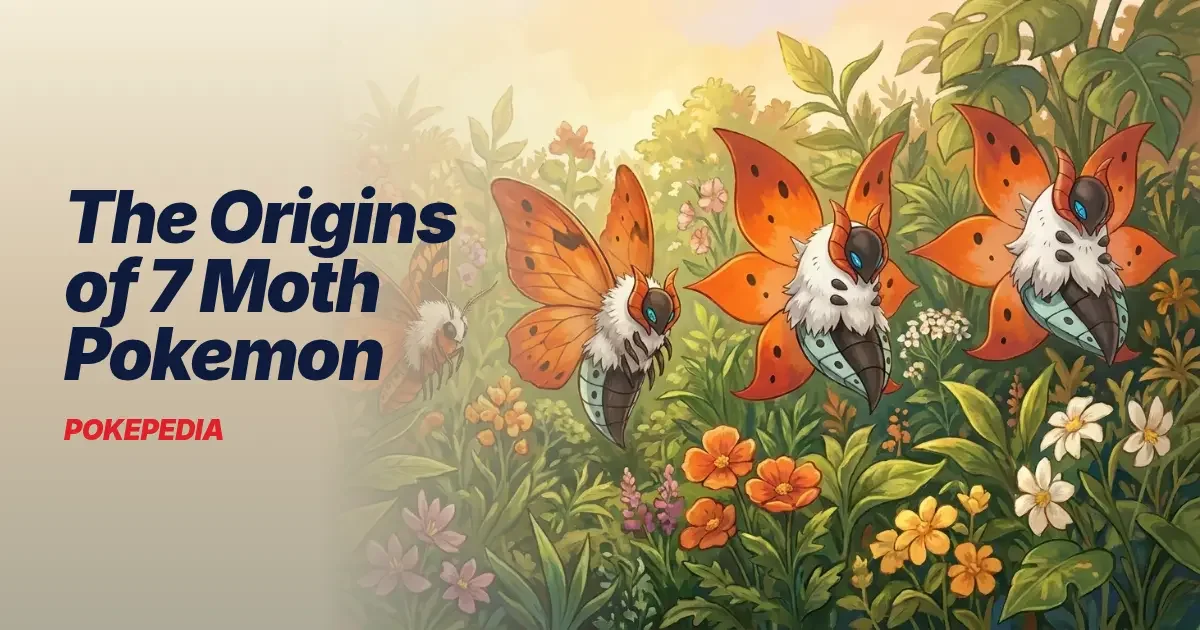
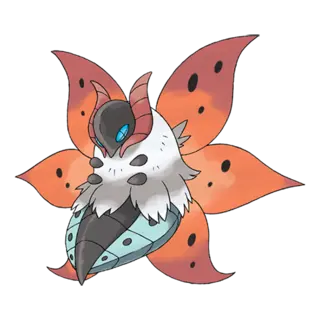
Volcarona, the Sun Pokemon, picks up where Larvesta's sun lore leaves off. It may be based on the garden tiger moth, the insect most commonly associated with the Japanese proverb about the summer insect that flies into the fire, and on various solar deities. Its flame-colored wings could also nod to seraphim, which may tie it to the Clymene moth, a cross-bearing tiger moth sometimes dubbed the crucifix moth, whose species name comes from the Greek nymph Clymene, lover of Helios. It and Larvesta could also echo legends of the phoenix born from a worm, as told in medieval Christian texts. It emerges from a cocoon formed of raging flames, and ancient murals depict it as a deity of fire. Its Special Attack of 135 is the highest in the group.
#873
Frosmoth
#873
Type
IceBug
Category
Frost Moth Pokémon
National Dex
#0873
Debut
Gen VIII
Base stat total
475
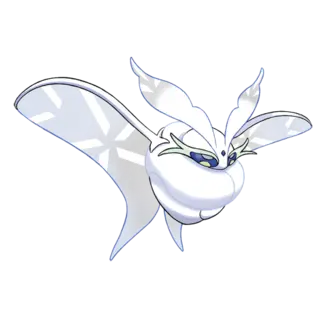
Frosmoth, the Frost Moth Pokemon, trades the sun for winter. It is based on a giant silk moth, going by its body shape and feathered antennae, and on the Ourapteryx genus, going by its color and tailed wings. Its Ice type is apparently inspired by O. nivea, whose Japanese name means "snow swallowtail moth". The myth behind it is Morana, a Slavic goddess of winter and death, along with Slavic superstitions of white moths as omens of death. The Pokedex says it shows no mercy to any who desecrate fields and mountains, flying around on icy wings and causing a blizzard to chase offenders away. (We'd like one assigned to every campsite with a litter problem.) Ice Scales, one of its abilities and the hidden one, halves the damage it takes from special moves.
Moth Pokemon Share the Old Idea of a Moth Flying Into a Flame
Strength in this group follows the myths more closely than the insects. Volcarona may draw on solar deities and Frosmoth on Morana, a Slavic goddess of winter and death, and those two post the highest base stat totals in the group, which are the sums of each Pokemon's base stats, at 550 and 475. The moth behind Venomoth, a swallowtail with no deity attached, comes next at 450.
Moth Pokemon FAQ
How many moth Pokemon are there?
The group is Venomoth, Beautifly, Dustox, Mothim, Larvesta, Volcarona and Frosmoth, and Beautifly is the one butterfly among them.
What is the strongest moth Pokemon?
Volcarona has the highest base stat total of the group, meaning the sum of its base stats, at 550.
Is Volcarona a moth?
Volcarona looks to be based on the garden tiger moth, even though its category calls it the Sun Pokemon, and its design also draws on solar deities.
Why is Frosmoth weak to Fire?
Ice and Bug are both weak to Fire, so Frosmoth carries a quadruple weakness, with both of its types adding to the damage Fire moves deal. That quadruple weakness may refer to the phrase "like moths to a flame".